
Transforming Patient Data into Actionable Insights: The Revolutionary PRomop Health Record System
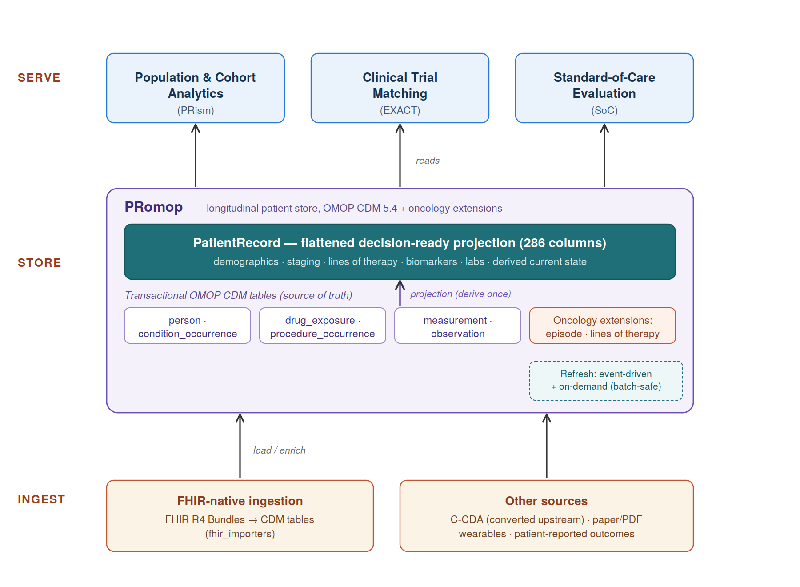
In a groundbreaking effort to streamline patient data management, a new study highlights the development of PRomop, a revolutionary longitudinal patient health record system built on the OMOP Common Data Model. Designed to help healthcare providers and biopharmaceutical companies convert fragmented patient data into actionable insights, PRomop promises to reshape how patient records are utilized in clinical settings.
The Challenge of Fragmented Patient Records
Across healthcare systems, patient data is often scattered across various providers and institutions, leading to inefficiencies and costly errors. Traditional methods of managing this information typically require individual applications to independently reconstruct a patient's clinical state, which can be both time-consuming and prone to inaccuracy. This redundancy not only complicates patient care but also hinders advancements in health analytics and AI.
Introducing PRomop: A Game-Changer in Health Records
PRomop, or PatientRecord on OMOP, addresses these challenges by providing a decision-ready, flattened projection of a patient's longitudinal health history. By collapsing extensive patient data into a singular, easily accessible row of 286 columns, PRomop eliminates the need for repetitive state reconstruction. As a result, downstream applications such as clinical trial matching, population analytics, and decision support systems can access data more efficiently and accurately.
Impressive Results from Real-World Deployments
The effectiveness of PRomop has been validated through deployment in two separate oncology organizations, supporting a collective patient population of approximately 17,500 individuals. Notably, the system has demonstrated a staggering improvement in efficiency—queries that previously required 27 to 39 data joins over traditional raw OMOP data can now be executed with zero joins against the PRomop projection.
A 23.9× Speed Boost: Streamlined Eligibility Screening
In controlled benchmarks using a synthetic cohort of breast cancer patients, the PRomop system was able to process eligibility screenings in an average of just 0.92 milliseconds compared to a staggering 20.7 milliseconds for the standard OMOP data tables—a remarkable ~23.9 times faster. This means that healthcare providers can access critical patient eligibility data quicker, potentially speeding up the matching of patients to clinical trials and improving patient outcomes.
Building a Continuous Learning Infrastructure
Beyond simply streamlining processes, PRomop is designed to be a living infrastructure—requiring ongoing maintenance and updates to meet evolving clinical needs. It serves as a foundation from which new capabilities can be built, lowering the marginal costs associated with deploying new analytic applications.
Conclusion: A New Era for Patient Data Management
As the healthcare industry continues to embrace data-driven methodologies, PRomop stands out as a pioneering solution that not only optimizes the use of patient data but also creates opportunities for improved health outcomes. By transforming fragmented records into cohesive, actionable insights, PRomop is setting a new standard for what longitudinal patient health records can achieve.
For more details about PRomop, including operational insights and future developments, refer to the study published by Adam Blum and Louis Ferger-Andrews from HealthKey, Inc., and Beth Israel Deaconess Medical Center.
Authors: Adam Blum¹, Louis Ferger-Andrews²,³
¹ HealthKey, Inc.
² Division of Clinical Informatics, Beth Israel Deaconess Medical Center, Boston, MA, USA
³ Fontys University of Applied Sciences, Venlo, Netherlands




