
Transforming Quantum Annealing: Breakthrough Diagonal Catalysts Change the Game
In the realm of optimization problems, quantum annealing (QA) has been a shining star. However, it has faced challenges due to populations getting trapped in local minima, leading to suboptimal solutions. A new research study titled Reshaping Quantum Annealing Landscapes with Diagonal Catalysts, authored by Andrés N. Caliz, Carlos Ramon-Escandell, and colleagues from Qilimanjaro Quantum Tech and several prestigious universities, introduces a groundbreaking method to enhance the efficiency of quantum annealers.
Understanding Quantum Annealing and Its Limitations
Quantum annealing is an optimization algorithm that aims to find the lowest energy state of a given problem by leveraging quantum mechanics. However, in challenging instances, populations often become stuck in local minima, making it difficult to reach the global optimum. This research addresses the pressing need to overcome these limitations to unlock the full potential of quantum computing in solving complex problems.
A New Approach: Diagonal Catalysts
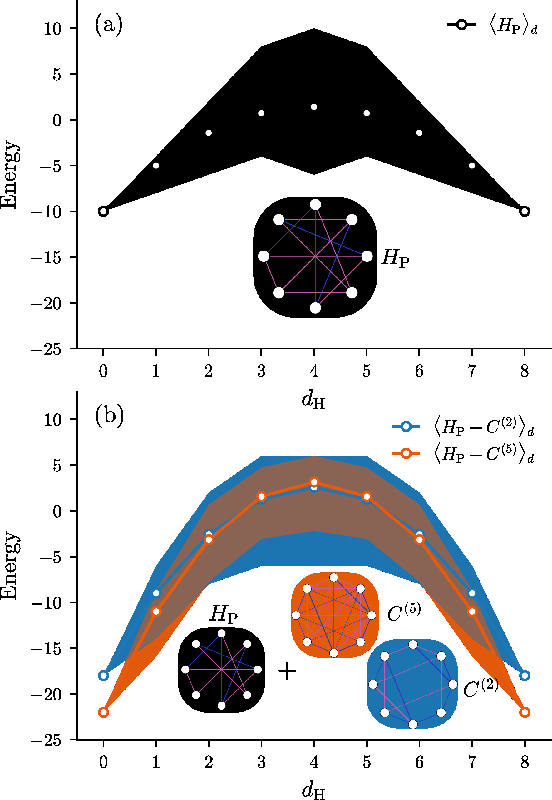
The researchers developed a mathematical framework that connects the energy landscape and Hamming distance (the number of bit differences between two configurations) to optimize the annealing process. They introduced the concept of ZZ-catalysts—specific diagonal Hamiltonians that focus on the configurations that are close to the optimal solution. These catalysts essentially reshape the energy landscape, making configurations that are far from the solution less energetically competitive, thus improving the overall efficiency of the annealing process.
Significant Gains in Performance
The results of their experiments are compelling. By applying their new methods on sparse quantum problems, the researchers demonstrated a significant increase in the probability of finding near-solution configurations during the annealing process. In their benchmarks, the diagonal catalysts led to a median increase of 351% in the likelihood of identifying near-optimal solutions. Remarkably, this improvement was consistent across various types of problems and configurations.
Implications for Quantum Computing
This innovative approach could have far-reaching implications for the future of quantum computing, particularly in fields where complex optimization problems are prevalent, such as logistics, finance, and artificial intelligence. The diagonal catalysts not only enhance the performance of quantum annealers but also provide a scalable strategy that can be integrated into existing quantum computing frameworks. By paving the way for more efficient problem-solving, this research has the potential to advance quantum technology towards real-world applications.
Conclusion: A Quantum Leap Forward
The development of diagonal catalysts signifies a pivotal moment in optimizing quantum annealing processes. By effectively reshaping the energy landscape and enhancing the probability of reaching optimal solutions, this research sets a new standard for efficiency in quantum computing. As further explorations in this field continue, the prospects look bright for the application of quantum technologies across various industries.
Authors: Andrés N. Caliz, Carlos Ramon-Escandell, Finnley Paolella, Josep Bosch, Jan Nogué, Arnau Riera, and Jordi Riu.




