
Transforming Retirement Income: How Spouse-Protected Tontines Can Secure Financial Futures!
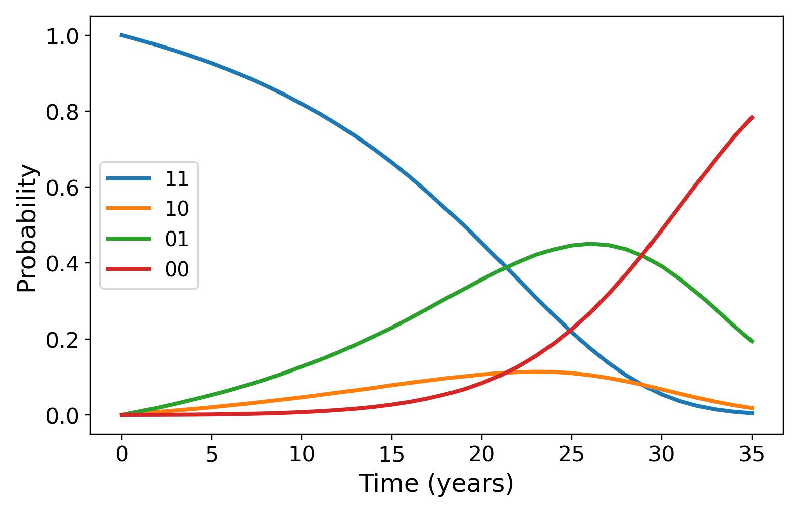
Recent research from Duy-Minh Dang and Yukan Perumal offers groundbreaking insights into a unique financial product: the spouse-protected tontine. This innovative structure aims to address long-term retirement income challenges by offering a safety net that continues to provide financial support to surviving spouses, ensuring their economic security even after a partner's demise.
Understanding Spouse-Protected Tontines
Traditionally, tontines function by pooling resources from multiple participants, redistributing payouts based on longevity. However, existing models often fall short of addressing the needs of couples, as benefits typically cease upon the death of the first participant. In contrast, the spouse-protected tontine retains the insurance pool even after the death of the retiree, allowing for ongoing financial support for the surviving spouse.
In this model, each household's contract remains active until both partners have passed away. This allows the surviving spouse to continue receiving financial support without forfeiture of the account's assets, which is a significant shift from traditional tontine models. The system is designed to manage the risks associated with varying mortality rates within couples, accounting for the longer lifespans often observed among women.
Key Features of the Research
The researchers established actuarial fairness conditions for these household contracts, ensuring that the financial model remains balanced and sustainable. They also introduced a global neural-network approach to optimize withdrawal and rebalancing policies throughout a household's retirement, balancing expected payments with a focus on minimizing risk. The goal is to achieve an optimal trade-off between ensuring steady income for retirees and managing the financial implications of lingering payouts to the surviving spouse.
One of the striking findings is that, under realistic demographic conditions, about 71% of contracts will likely enter the spouse-only phase—a significant statistic that underscores the relevance of this financial product. The average duration for these phases can last approximately 12.25 years, indicating that planning for such scenarios is vital for long-term financial strategies.
Implications for Future Retirement Planning
As the demographic landscape shifts, with an increasing number of couples in the retirement phase, the need for innovative financial products like spouse-protected tontines becomes essential. These vehicles not only foster longevity pooling but also ensure greater resilience for households against unforeseen challenges. By allowing households to navigate long-term financial planning while considering both partners' lifespans, these instruments could revolutionize retirement funding strategies.
This research highlights the importance of tailoring financial products to meet the evolving needs of families, showcasing a promising path forward for financial security in retirement. The next steps involve further exploration of cross-country applications of these findings and optimization of policy frameworks to effectively incorporate such innovative solutions into retirement planning. As these products gain traction, they may very well redefine expectations surrounding financial preparedness in later life.


