
Transforming Robotic Manipulation: The FORM Approach to Understanding Materials Instantly
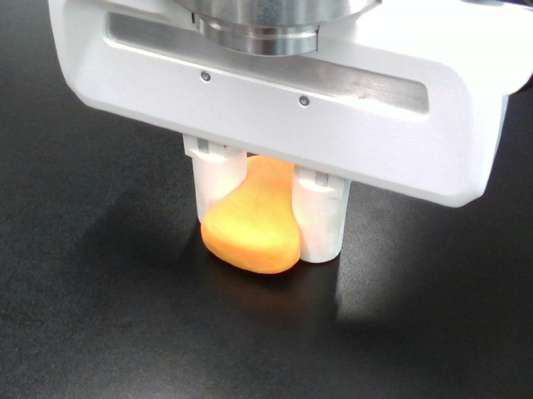
In a groundbreaking leap forward for robotics, researchers have developed a method that allows robots to identify and manipulate unfamiliar deformable materials faster and more efficiently than ever before. The research, led by Stepan Tretiakov and colleagues, introduces FORM (From Observed Response to Material laws), a novel approach that could reshape the future of robotic applications where interaction with various materials is critical.
The Challenge of Unknown Materials
When robots encounter new materials, they often struggle due to a lack of prior knowledge about the physical properties of those materials. Different materials can react drastically differently under similar conditions, which complicates tasks such as pouring, shaping, and inserting objects—and errors can lead to poor performance or even failure of tasks.
How FORM Works
Unlike traditional methods which may take 10-25 minutes per task to identify material properties, FORM reduces this time to a mere 2-5 seconds. It accomplishes this by leveraging a weak-form momentum balance approach that translates observed behaviors of materials into linear equations. This allows the robot to predict how the material will respond to new actions and geometries without needing extensive recalibration.
Essentially, FORM allows for the quick capture of material response data during a single interaction. By employing linear least-squares optimization, the recovered models can be used directly for manipulation planning without the need for additional fitting or complex simulation processes.
Impressive Results Across Various Tasks
The practical implications of FORM are extensive, as seen in its application across four distinct manipulation tasks: elastic rod insertion, golf putting with an elastic club, elastoplastic shaping, and target-volume pouring. Each task showcased the system's ability to reuse the identified material model effectively, achieving strong accuracy even under different motions or geometries.
For instance, when implementing FORM in golf putting, the system identified elastic properties with an impressive error margin of just 3.4%. Additionally, in shaping tasks, it achieved an intersection over union of 72.4-77.8% when manipulating materials akin to modeling clay.
The Future of Robotic Interaction
This innovative methodology not only exhibits exceptional speed and accuracy in material identification but also emphasizes the potential for robots to conduct complex tasks autonomously. As robots become increasingly integrated into daily operations, from manufacturing to personal aid, FORM signifies a substantial stride toward enhancing their capabilities.
As these technologies continue to evolve, the question of how robots will adapt to a diverse array of materials becomes less daunting. With FORM, the future of robotic manipulation appears not just plausible, but advantageous, opening doors to unprecedented capabilities in robotics.
For those interested in exploring further, the project is shared comprehensively at the FORM project page, including videos and code access through their GitHub repository.
Authors: Stepan Tretiakov, Ruihan Zhao, Cheng-Hsi Hsiao, Xingjian Li, Adam Thorpe, Hassan Iqbal, Sandeep Chinchali, Ufuk Topcu, Krishna Kumar.


