
Unleashing Robotic Surgery Precision: A Revolutionary Leap with the MV-dVRK Dataset
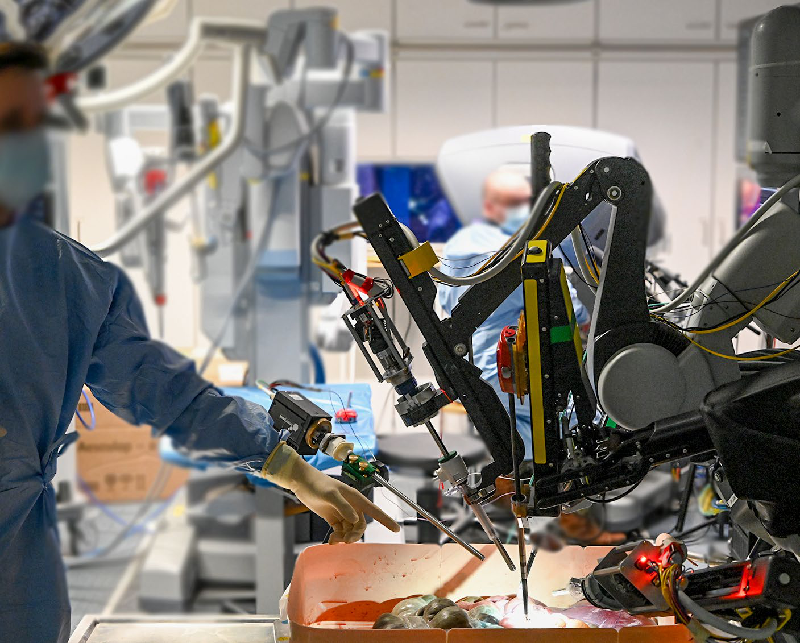
In the world of robotic surgery, where precision can mean the difference between success and failure, the introduction of the MV-dVRK dataset marks a significant milestone. This pioneering dataset not only enhances 3D reconstruction for surgical applications but also sets the stage for a new era in minimally invasive procedures.
Understanding the MV-dVRK Dataset
The MV-dVRK dataset, developed by a collaborative team from esteemed institutions like the Max Planck Institute for Intelligent Systems and ETH Zurich, offers a comprehensive benchmark specifically designed for evaluating multi-viewpoint surgical perception. Unlike existing datasets that have offered limited perspectives, MV-dVRK integrates a robust framework with multiple synchronized stereo views, providing a holistic approach to capturing intricate details during surgical operations.
What Sets MV-dVRK Apart?
Traditionally, surgical robots utilize a single stereo camera, leading to vast gaps in the visualization of internal anatomy. The introduction of the MV-dVRK dataset mitigates these gaps by enabling evaluations on real endoscopic images across varied surgical tasks. With three synchronized stereo viewpoints, the dataset allows for rigorous testing and comparison of advanced 3D reconstruction techniques. This multi-view approach ensures that even complex scenarios involving tissue deformation are accounted for, enhancing the accuracy of surgical visualizations.
Enhancing Surgical Perception: The Technical Edge
The research emphasizes the impact of utilizing additional viewpoints in robotic surgery. As the number of viewpoints increases, so does the coverage of the internal anatomy, as demonstrated by tests that revealed a remarkable 67% coverage of ground-truth surface points with highly accurate camera poses. This improvement is pivotal for enabling surgeons to visualize anatomy from various angles, significantly enriching their spatial awareness during operations.
Implications for Future Surgical Practices
MV-dVRK is not just a dataset; it serves as a stepping stone towards refining robotic-assisted surgeries. The findings from this comprehensive benchmark indicate a promising correlation between the integration of multiple viewpoints and the overall success of 3D surgical perception. By enabling more accurate geometric modeling, the MV-dVRK dataset paves the way for advancements in robotic surgery, empowering surgeons with the tools necessary to navigate complex anatomical structures with confidence.
Conclusion: A Leap into the Future
As we delve deeper into an era where technology meets medicine, the MV-dVRK dataset heralds a new dawn for robotic surgery. By providing a detailed and accurate representation of surgical environments and anatomy, it stands poised to transform surgical practices, enhance patient outcomes, and fundamentally alter our approach to minimally invasive procedures.
Authors: Guido Caccianiga, Sergey Prokudin, Yutong Chen, Bernard Javot, Rachael L’Orsa, Omer Burak Alada˘g, Yarden Sharon, Jens Rolinger, Ivan Capobianco, Anton Deguet, Siyu Tang, Katherine J. Kuchenbecker




