
Unleashing Superconductivity: How Driven-Dissipative Protocols Transform Moiré Heterostructures
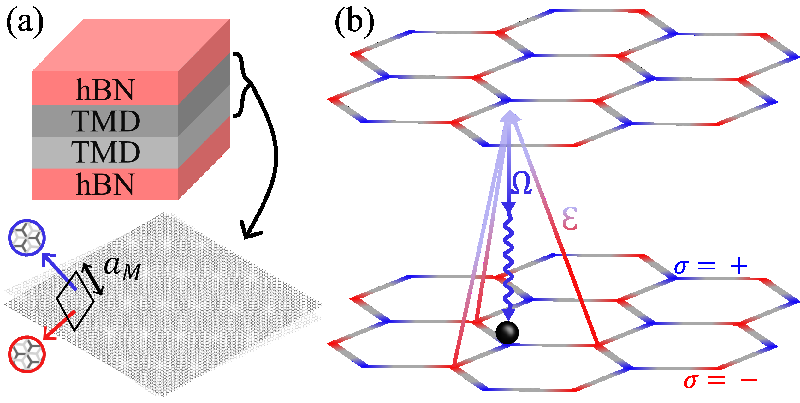
In a significant breakthrough, researchers from multiple leading institutions have proposed a method for achieving superconductivity in two-dimensional moiré heterostructures without relying on traditional attractive interactions. Published by Tsung-Sheng Huang and colleagues, this innovative approach utilizes a driven-dissipative protocol that prepares superconductivity as a steady-state condition, highlighting a novel pathway for exploring quantum materials and phenomena.
The Concept of Driven-Dissipative Superconductivity
Traditionally, superconductivity has been enhanced by increasing attractive interactions between electrons. However, this new research presents a different viewpoint: instead of merely enhancing attraction, the team focused on managing dissipation—essentially utilizing the natural decay processes within the system. This method exploits a bilayer moiré material where the structure's layer arrangement serves as a 'pseudospin', allowing researchers to induce desired pairing symmetries through optical controls.
Engineering the Moiré Heterostructure
The researchers engineered a two-dimensional moiré heterostructure comprised of a transition metal dichalcogenide (TMD) bilayer sandwiched between hexagonal boron nitride (hBN) layers. At the heart of their approach is the application of optical driving techniques that allow control over the layer pseudospin. This enables a unique maneuverability that distinguishes it from conventional methods, thus opening new frontiers in material science and quantum physics.
The Role of Local Dissipation
A critical aspect of the process involves local dissipation emerging from weakly dispersive bosonic modes inherent in the heterostructure. This dissipation is engineered through a combination of Raman transitions that facilitate interactions between layers. The research indicates that the effective emission of phonon modes results in a suppression of competing excitations, steering the system towards its target superconducting state efficiently.
Bridging Steady-State Superconductivity with Superradiant Burst
The fascinating twist in the research reveals that the same platform can host two distinct phenomena: steady-state superconductivity and transient superradiance. While the steady state showcases long-lived superconducting order, the transient regime exhibits bursts of superradiance that emerge early in the process. This interplay offers profound insights into many-body phenomena and hints at underlying connections between disparate quantum states.
Implications for Future Research and Applications
This groundbreaking work paves the way for employing driven-dissipative protocols in quantum materials, potentially leading to the development of novel superconducting states. By careful tuning of optical drives and dissipation mechanisms, researchers may access complex quantum phases previously thought unattainable. The findings not only reshape our understanding of superconductivity but also inspire new experimental avenues across condensed matter physics, quantum optics, and beyond.
As researchers continue to explore the quantum realm, the implications of this study could fundamentally change the landscape of material science and electronic applications.
Authors: Tsung-Sheng Huang, Ataç Imamoglu, Mohammad Hafezi, Sebastian Diehl




