
Unlocking Chaos: A Robust Approach to Epidemic Inference on Changing Social Networks
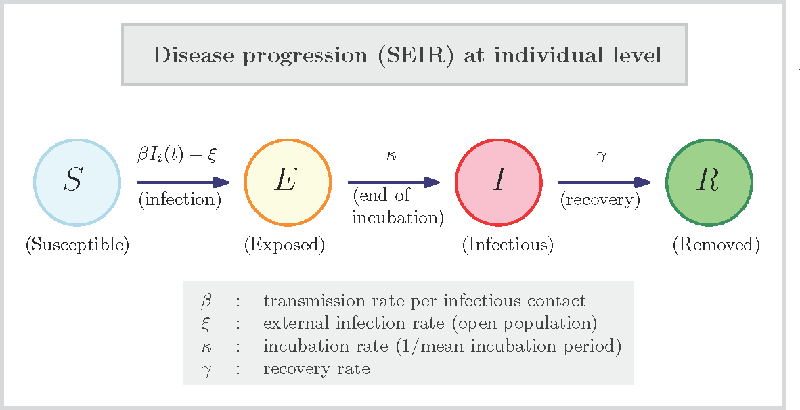
The latest research from Md Asaduzzaman at the University of Staffordshire offers an innovative solution to one of the pressing challenges in infectious disease modeling: how to accurately infer disease transmission dynamics on complex, constantly changing social networks. Traditional models often oversimplify these dynamics, assuming fixed contact patterns or fully observed networks, which can lead to significant inaccuracies in understanding and controlling outbreaks.
The Challenge of Data Incompleteness
In reality, the spread of diseases is influenced by intricate patterns of human interaction that evolve over time. Many existing models fail to account for incomplete data, such as unobserved contacts, latent infection periods, and measurement errors, leading to flawed epidemiological insights. Asaduzzaman's research has developed a complete-data likelihood framework that integrates both epidemic processes and dynamic network structures. This unified approach allows for a more nuanced understanding of how diseases spread, especially in environments where data is often incomplete or imprecise.
SEIR Meets Dynamic Networks
The research combines the well-established susceptible-exposed-infectious-removed (SEIR) model with a dynamic contact network, which reflects real-world social interactions better than static models. By treating both epidemic timelines and contact histories as latent processes, the framework accommodates the variability of network evolution, allowing parameters related to disease spread to be estimated with greater precision.
This model's form is particularly significant as it captures the delicate interactions between disease dynamics and social behavior—an essential factor during outbreaks of infectious diseases, where people adapt their contact patterns in response to perceived risks.
A Roadmap for Inference
Using a complete-data event-history likelihood, this framework opens new avenues for statistical inference, particularly under scenarios of partial observation while addressing latent states and imperfect observation mechanisms in a coherent manner. This development is crucial for researchers and public health officials aiming to derive actionable insights from available data.
The results suggest a promising future for statistical modeling in epidemiology, with applications extending beyond infectious diseases to areas like social dynamics and information diffusion.
Effective Decision-Making in Public Health
Ultimately, understanding how diseases travel through populations and how social networks evolve is vital for effective public health interventions. By leveraging this robust framework, health authorities can make more informed decisions that could help mitigate the impact of future outbreaks, ensuring public safety and the efficient allocation of resources.
The Next Steps
The implications of Asaduzzaman’s work are vast. Moving forward, the model could be expanded to include additional complexity, such as varying degrees of social connectivity or different infectious disease pathways. Furthermore, applying this framework to real-world data could validate its effectiveness and provide insightful policy guidance in managing public health crises.
In summary, this research not only offers a strong methodological foundation but also emphasizes the importance of integrating epidemic modeling with behavioral insights, paving the way for a more effective response to infectious disease outbreaks.




