
Unlocking Cost Efficiency in Cybersecurity: A Breakthrough Study on Security Agent Evaluations
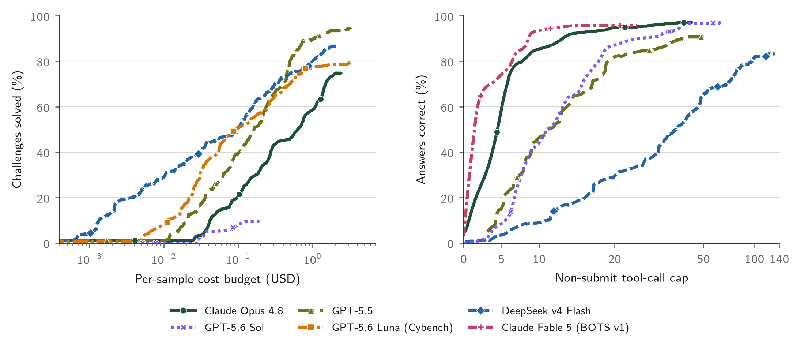
In the ever-evolving battlefield of cybersecurity, merely measuring a security agent's capability based on success rate can be misleading. A fresh perspective comes from a recent study conducted by researchers Paul Kassianik, Blaine Nelson, and Yaron Singer, who advocate for a cost-aware evaluation of both offensive and defensive security agents. Their examination reveals critical insights into how operational efficiency can significantly impact cybersecurity strategies, offering practical guidelines for improving AI agent performance in real-world situations.
Understanding the Cost-Success Tradeoff
Traditionally, security evaluations focus primarily on peak performance levels, evaluating how well models can discover vulnerabilities or execute successful penetration tests under generous budget conditions. However, this study proposes a more nuanced analysis, whereby the performance is evaluated against fixed cost levels. Essentially, it questions, "How much capability does a model deliver per dollar spent on inference and tooling?" This shift in focus allows security operations to better gauge the economic efficiency of their tools alongside their success rates.
Key Insights from Evaluations
The study examines two benchmark platforms: the offensive Cybench and the defensive Splunk BOTS V1 challenges. By analyzing these platforms, the researchers discover distinct patterns in how offensive and defensive tasks scale with budget limits—essentially, how operational and economic dynamics affect performance. Here are some of the key findings:
- Offensive Performance: On platforms like Cybench, increasing the computational budget results in better success rates for finding vulnerabilities, illustrating that more resources can indeed yield superior results. For instance, models using additional test-time compute displayed marked improvements.
- Defensive Limitations: Conversely, in the Splunk BOTS investigations, the involvement of more resources does not automatically translate to better performance. Instead, defensive success appears to hinge significantly on effective use of tools, efficient telemetry navigation, and timely enrichment. This highlights a vital disparity in how resources are leveraged across offensive versus defensive security contexts.
Beyond Success Rates: A Holistic Approach to Security Evaluations
The findings suggest a paradigm shift in how security agents should be benchmarked in the future. The need for evaluations that reflect real-world operational contexts and resource decisions becomes clear. The researchers emphasize that public benchmarks should incorporate economic efficiencies alongside traditional success metrics. This leads to more reliable data regarding which models are pragmatically beneficial in contemporary security operations.
Implications for Cybersecurity Practices
The researchers not only provide a framework for evaluating security agents through a cost-aware lens, but they also contribute to a vital conversation regarding the functionality of AI in cybersecurity. As defenders face increasingly sophisticated threats, understanding the economic aspects of resource allocation becomes equally crucial as assessing the capabilities of the technologies themselves. The study is accessible for further exploration at their dedicated website, and its insights could redefine how the cybersecurity field interprets agent performance in the future.




