
Unlocking Geodesics in the Conformally Invariant Metric: Surprising Insights from CLE4
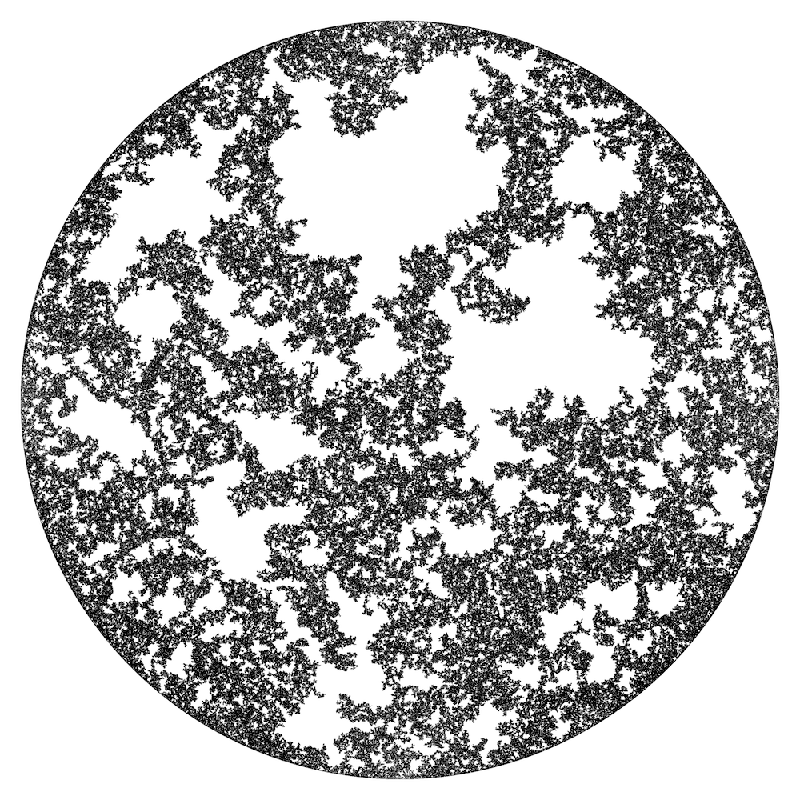
A groundbreaking research paper delves into the intricate world of conformal loop ensembles (CLE) and their metrics, particularly focusing on the case of the critical parameter κ = 4. This study, led by Emmanuel Kammerer, Konstantinos Kavvadias, Jason Miller, and Yi Tian, outlines the existence of geodesics within this conformally invariant framework, offering both theoretical advancements and practical implications in the realm of mathematical physics and probability.
Understanding the Core Concepts of CLE
The paper provides an insightful continuation of previous work on CLE, establishing that the loops generated by a CLE with κ = 4 are not just random constructs, but instead facilitate the formation of a unique, conformally invariant, local, and geodesic metric. This metric allows for a precise measurement of distances between CLE loops, and is crucial for understanding both the geometry of these loops and their applications in modeling complex systems.
Specifically, the authors prove a significant result: the existence of geodesics between any two loops within the ensemble. This is established through intricate geometric properties derived from the loops themselves, leveraging quantitative estimates related to the distances traveled across rectangles in the plane defined by the ensemble.
The Mathematical Path to Geodesic Discovery
The researchers set forth a systematic approach to demonstrate the existence of geodesics. By defining a sequence of loops and closely analyzing the relationships between their respective metrics, the study culminates in a robust framework whereby each sequence forms an admissible path between any two loops in the ensemble.
Moreover, the paper elaborates on the subtle implications of these geodesics. It highlights how they contribute to the overall understanding of the CLE structure, emphasizing the necessity of having densely connected paths in light of the geodesic's properties. The research shows that as one begins to traverse from one loop to another, the addition of intermediary loops creates a seamless connection that satisfies various mathematical criteria.
Implications and Future Directions
The implications of these findings extend beyond theoretical mathematics into practical applications across quantum field theory, statistical mechanics, and beyond. The newly established connections between geodesics and their corresponding length measures are likely to inspire further research into CLE and its applications.
The authors conclude by noting that their findings set the stage for future exploration regarding the uniqueness of geodesics in this context, paving the way for potential advancements in understanding complex systems governed by such stochastic processes. As researchers continue to dissect the implications of CLE, the foundational work presented in this paper is poised to significantly impact the field.




