
Unlocking Robot Autonomy: The Groundbreaking Skill-Space Shooting Approach to Learning from Failures
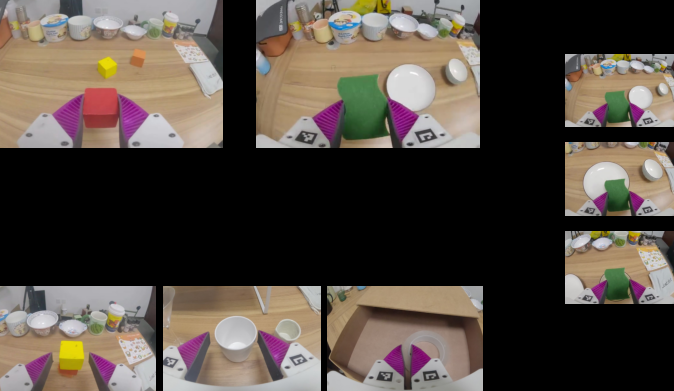
In a significant stride towards autonomous robotics, researchers have unveiled a novel framework called skill-space shooting. This innovative approach allows robots to improve their task performance by leveraging reusable short behaviors as corrective actions. The study, conducted by an esteemed team from Tsinghua University and UC Berkeley, addresses a pivotal challenge in robotics: enhancing the adaptability of robots in unfamiliar environments without continuous human intervention.
The Need for Autonomous Learning in Robotics
Robots are increasingly deployed in various real-world scenarios, from home assistance to industrial applications, and they often encounter situations that were not part of their original training. These challenges can expose significant weaknesses in their task policies, leading to repeated failures whenever they confront new or unforeseen conditions. Traditionally, human demonstrations are required to rectify these failures, which can be time-consuming and inefficient. The researchers recognize the need for a mechanism that allows robots to autonomously learn from their mistakes, improving their performance over time without requiring excessive human guidance.
How Skill-Space Shooting Works
Skill-space shooting introduces a unique method of using learned skills—essentially short behaviors that can be applied across different tasks—to identify and correct failures during task execution. By integrating foundation models, which are advanced machine learning systems that understand complex tasks and object interactions, robots can autonomously determine the most suitable corrective actions when they encounter problems.
For instance, if a robot is tasked with placing objects but fails to grasp them correctly, the skill-space shooting approach enables the robot to invoke a specific skill, like "grasping," at the moment of failure. This skill can be executed to rectify the immediate issue, enabling the robot to continue with its task. The successful executions not only help complete the current task but also provide valuable learning experiences that refine the robot's overall decision-making process in future attempts.
Real-World Applications and Results
Through rigorous experimentation on various tasks such as stacking, opening drawers, pouring coffee, and sweeping, the researchers demonstrated that skill-space shooting significantly enhances the performance of robotic policies over successive iterations. The results were compelling: even robots that initially failed to complete any task were able to succeed after undergoing this autonomous learning process, showcasing the robustness of the framework.
Moreover, the framework allows for the reuse of learned skills across tasks, reducing the amount of human teaching required for new tasks. This feature is particularly promising for scaling robotic systems as they can adapt to new environments and tasks more efficiently than ever before.
The Future of Autonomous Robotics
Skill-space shooting marks a major advancement in the pursuit of fully autonomous robotic systems capable of ongoing improvement through experience. As robots increasingly integrate into everyday life, the ability to adapt and learn autonomously will be crucial in enhancing their utility and effectiveness. This research heralds a new era where robots not only execute commands but also learn from their failures and successes, paving the way for more resilient and intelligent machines.
For further insights into skill-space shooting and its potential applications, check out the additional resources and demonstrations provided by the research team.
Authors: {Zihang Rui, Renhao Wang, Haoxu Huang, Yang Gao}


