
Unlocking Robot Learning: How Egocentric Human Data Can Transform Performance
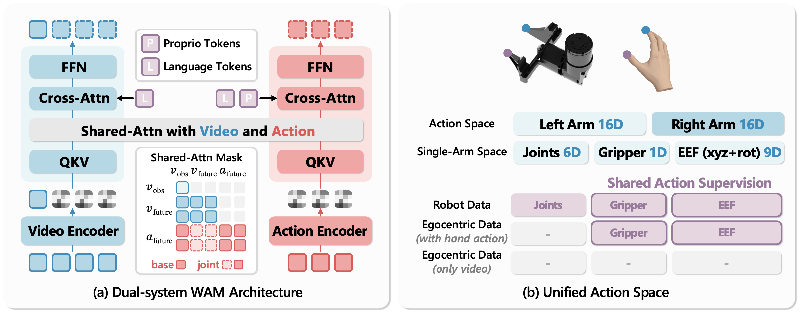
Research on robot learning has taken a significant leap with the introduction of egocentric human data. A recent study titled fEGO4WAM: What Matters When Scaling Ego-Centric Human Data for Robot Learning?, conducted by a team from Fudan University and Horizon Robotics, uncovers key insights on how varying properties of human data can influence robot performance. The findings suggest that the quality and alignment of the data, rather than just its quantity, play a pivotal role in enhancing robot learning capabilities.
The Importance of Egocentric Data
Egocentric human data refers to experiences collected from a first-person perspective, providing rich, scalable sources of experience for training robots. Traditional robot training often relies on programmed tasks or human teleoperation, which limits the breadth of experience. This study highlights how egocentric data not only covers a wider array of objects and scenes but also supports various forms of supervision necessary for effective learning.
Key Findings from the Study
The research team systematically explored how different aspects of egocentric data influence robot learning performance. They focused on four main factors: human-robot alignment, data duration, task diversity, and action supervision. Here are some key takeaways:
- Human-Robot Alignment Matters: Aligning human demonstrations with robot actions enhances the robot's ability to generalize to new, unseen tasks. Examples of such tasks include folding cloth or placing objects into a basket.
- Task Diversity Is Crucial: While a larger pool of data is beneficial, the type of tasks that data covers can significantly affect performance. More diverse tasks can improve a robot's adaptability and learning speed.
- Effective Use of Supervised and Unsupervised Data: Interestingly, the study found that even videos without detailed action labels could significantly aid training, providing the robot with foundational understanding through video-action training.
Implications for Future Robot Learning
The study's findings offer practical insights for researchers and developers aiming to enhance robot learning systems. Instead of solely focusing on increasing the amount of data, creators should prioritize the alignment of that data with the types of tasks they want robots to perform. This shift in perspective can lead to more efficient training methods and improved robot performance across a broader range of scenarios.
In conclusion, the research emphasizes that when it comes to scaling egocentric human data for robot learning, it's not just about quantity—quality, alignment, and how the data is utilized are equally important. As the robotics field continues to evolve, these insights may guide future advancements, paving the way for more capable and adaptable robotic systems.
Authors: Zhihao Sun, Liu Liu, Xinjiang Wang, Haoyi Jiang, Wei Feng, Huiqiang Zhang, Xiaosong Jia, Zhizhong Su, Zuxuan Wu


