
Unlocking the Future of Scientific Indexing: Can Generative AI Outperform Supervised Learning?
A groundbreaking study conducted by researchers from the Deutsche Nationalbibliothek explores the potential of generative AI in the realm of automated subject indexing. In a world drowning in scientific literature, the ability to accurately classify documents is more crucial than ever. This research pits traditional supervised Extreme Multi-Label Classification (XMLC) techniques against innovative generative models to determine which can generate the most effective subject headings for German scientific texts.
The Challenge of Subject Indexing
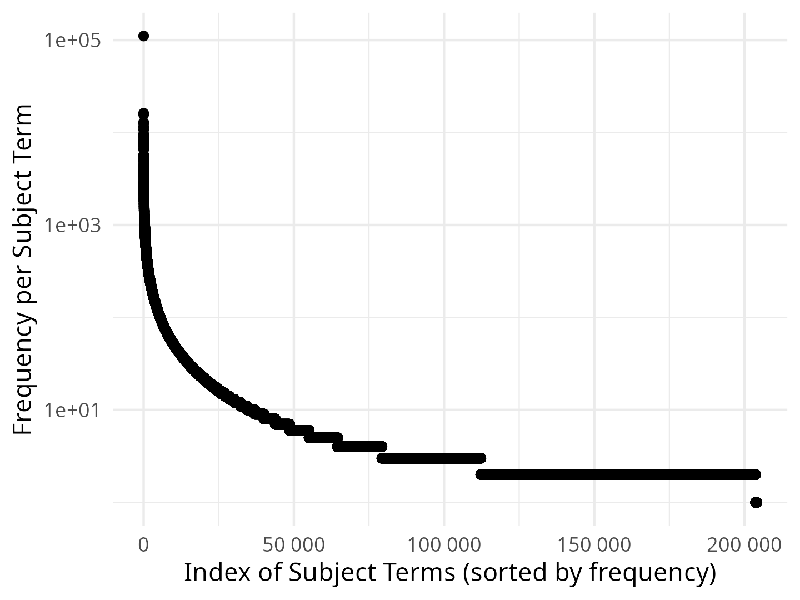
Automated subject indexing plays a significant role in managing the vast amounts of information produced today. However, this process is not straightforward. It requires assigning relevant subject headings from a controlled vocabulary, a task complicated by the enormous size of the Integrated Authority File (GND) used in Germany, which consists of 1.4 million potential subject terms. This vast array leads to extreme sparsity and imbalanced label distribution, making the task an extreme multi-label classification challenge.
Research Methodology
The researchers undertook a comprehensive benchmarking study, applying a variety of XMLC methods alongside their own recently developed large language model (LLM)-based techniques. They tested these approaches using two specific tasks: indexing based on the titles of books and indexing based on the first 30,000 characters of the full text. The performance of each method was evaluated using binary relevance and graded relevance metrics by professional subject librarians, offering a comparative landscape of effectiveness.
Key Findings: A Battle Between Tradition and Innovation
The results unveiled a compelling narrative. While traditional XMLC algorithms utilizing transformer-based dense features showed superior performance in overall binary relevance metrics, the LLM-based generative methods excelled in graded relevance, particularly in handling rare subjects—often referred to as the long tail of vocabulary. This suggests that generative AI could provide not only accurate predictive capabilities but also a nuanced understanding of content that traditional methods might overlook.
The Insights at a Glance
- Supervised Learning's Strength: Transformer-based approaches showed the best results in binary relevance, indicating their efficacy with common subject terms.
- Generative AI's Advantage: LLM methods outperformed in graded relevance and on the long tail of subject terms, making them a strong candidate for future indexing applications.
- Resource Intensive: While generative methods showed promise, they also proved more resource-heavy, with higher inference times, which could be a hurdle for large-scale applications.
Implications for the Future
This study contributes significant insights into the ongoing dialogue surrounding automated subject indexing in libraries. It suggests a dual approach might be necessary, combining the strengths of both traditional supervised methods and advancing generative AI techniques to create a robust automated indexing system. As library systems continue to evolve, embracing these technological advancements may lead to more effective and efficient information retrieval.
In summary, this research underscores the importance of adaptability in the face of changing information landscapes and encourages ongoing exploration of AI's role in enhancing our ability to manage knowledge effectively.
Authors: Max Kähler, Katja Konermann, Lisa Kluge, Markus Schumacher




