Unlocking the Galactic Mystery: How Gluonic Dark Matter Might Explain the Acceleration Scale
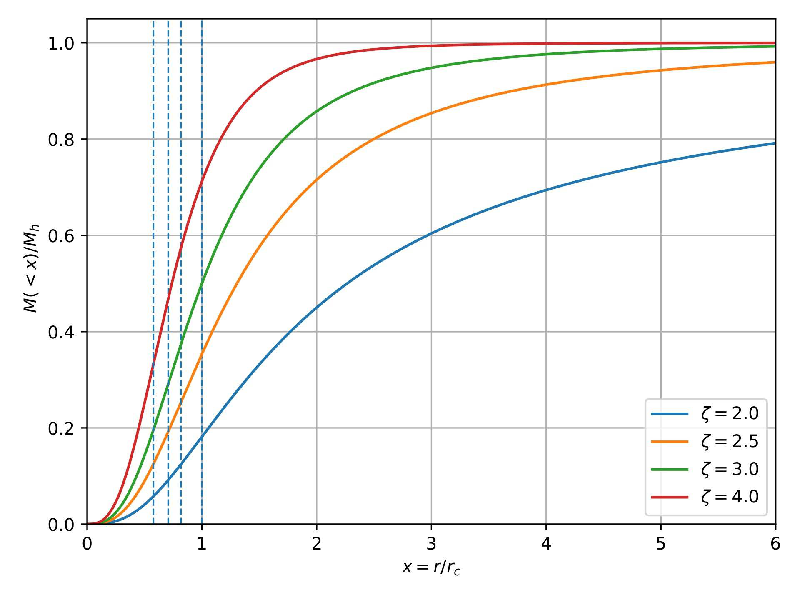
A groundbreaking paper proposes that the peculiar behavior of galaxies, specifically their radial acceleration, can be attributed to a novel aspect of dark matter. Researchers Gilles Cohen-Tannoudji and his colleagues suggest that a long-lived, color-neutral gluonic vacuum component provides a framework to explain the observed acceleration scale of approximately 10−10 m/s2, challenging conventional cold dark matter models.
The Radial Acceleration Relation
The Radial Acceleration Relation (RAR) is an intriguing phenomenon in astrophysics, revealing a tight correlation between the gravitational acceleration observed in galaxies and that predicted from their baryonic (visible matter) mass distribution. Despite different evolutionary histories and structures, this relationship shows a remarkable uniformity across diverse galaxies. The paper argues that instead of being a statistical fluke, this universality may stem from intrinsic properties of the dark sector itself.
A New Perspective on Dark Matter
The paper introduces the concept that an infrared spectral gap in a coherent gluonic dark sector could be responsible for this universal acceleration scale. By invoking principles of quantum chromodynamics (QCD), the authors argue that the trace anomaly – a concept that relates different scales in particle physics – births an intrinsic scale governing dark matter dynamics. This means that rather than being influenced by the formation histories of individual galaxies, the acceleration scale is a fundamental aspect of the dark sector's structure.
Self-Gravitating Gluonic Condensate
Central to the researchers’ argument is the idea of a self-gravitating condensate composed of gluonic particles that exhibit Bose-Einstein characteristics. This condensate, dominated by its lowest-weight excitation states, generates a characteristic acceleration that coincidentally matches observed galactic scales without necessitating modifications to classical Newtonian gravity. By modeling how this gluonic structure responds to gravitational perturbations from baryonic mass, the authors demonstrate a natural consistency with empirical data.
Implications and Future Research
The intriguing conclusions drawn from this research lead to several key implications for cosmology and the understanding of dark matter. Firstly, if the galactic acceleration is truly the result of gluonic dynamics rather than extraneous variables, this could reshape fundamental theories about dark matter. Additionally, the study calls for more rigorous examinations of the RAR in different galactic contexts to explore the robustness of this model.
Future investigations will need to address these findings through observational data, particularly in terms of galaxy formation and evolution. Establishing a concrete link between the intrinsic properties of the dark sector and observable phenomena could propel astrophysics into new realms of understanding regarding the universe's fundamental constituents.
Ultimately, this research could not only revolutionize how scientists view dark matter but also enhance comprehension of galactic behaviors across the cosmos. As the discussion continues regarding the nature of the universe's unseen components, the insights provided by this new framework will undoubtedly play a pivotal role in shaping future explorations.
Authors: Gilles Cohen-Tannoudji, Jean-Pierre Gazeau, Hamed Pejhan, Jean-Pierre Treuil

