
Unlocking the Mysteries of Newspaper Layouts: How Innovative AI is Redefining Image Analysis
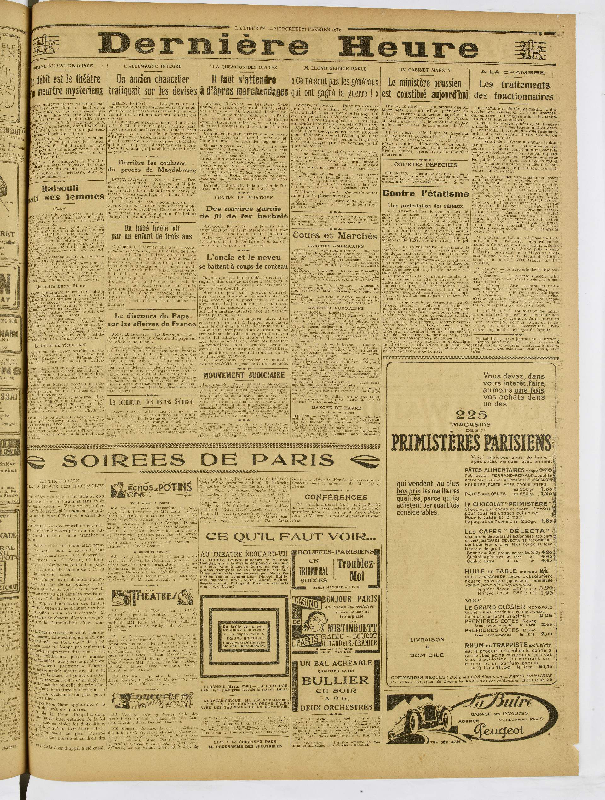
The world of newspaper archiving and digitization stands at a pivotal moment with new research delving into the complexities of analyzing newspaper images. A recent study titled Towards Hierarchical Structure Understanding of Newspaper Images by William Moca¨er et al. from the University of Rouen Normandy presents groundbreaking approaches to deciphering the layered and intricate structures that characterize newspapers.
The Challenge of Newspaper Image Analysis
Newspapers are a rich tapestry of information, often containing a mix of articles, advertisements, illustrations, and more, all crammed into complex layouts. This poses significant challenges for AI systems trying to accurately identify and analyze content within these pages. Traditional methods have struggled due to the dense and often convoluted organization of newspaper layouts.
The research addresses these issues through two innovative strategies: a bottom-up approach using state-of-the-art open-source models and a top-down architecture named Tiramisu, which utilizes the latest transformer-based technology to understand document hierarchies.
Two Approaches, One Goal: Understanding Hierarchical Structures
The first approach involves a modular bottom-up pipeline. This system employs several robust models, including YOLO for layout detection, LayoutReader for predicting reading order, and a custom algorithm for segmenting articles. This pipeline is flexible and interpretable, making it easier to harness existing technologies to tackle specific problems of newspaper analysis.
The second, and perhaps more innovative method, is Tiramisu. This end-to-end transformer-based architecture aims to emulate human-like reading strategies, going through multiple layers to extract detailed information from the document. It recognizes sections, articles, and localized content using advanced attention mechanisms, drastically improving the understanding of newspaper hierarchies.
The Finlam La Liberté Dataset: A New Benchmark for Research
Accompanying their study, the authors introduce the Finlam La Liberté dataset, tailored for historical newspaper analysis. This dataset contains over 1500 complete newspaper issues, segmented into semantic zones and equipped with extensive annotations. The dataset not only aids in the evaluation of the two proposed methods but also lays the groundwork for future research in this challenging field.
By releasing this open-access resource, the authors aim to enhance collaboration and innovation in digital humanities and AI, providing researchers with the tools necessary to further understand and digitize textual heritage.
Comparative Analysis: Two Paths to Success
The experimental results from the research highlight the respective strengths of both strategies. While the bottom-up approach demonstrated superior performance in overall accuracy and speed, Tiramisu excelled in understanding the intricate relationships and hierarchies within newspaper content despite certain challenges in detection.
This research not only offers promising technological advancements but also underscores the need for continued exploration in automated document analysis—a crucial endeavor as we strive to preserve historical narratives in the digital age.
As the French National Library plans to implement the bottom-up pipeline on its stored collection of over 8 million documents, the implications of this research will soon be realized on a grand scale, making newspaper digitization faster and more accurate than ever before.




