
Unlocking the Secrets of Bioacoustics: How Metadata Boosts Species Identification
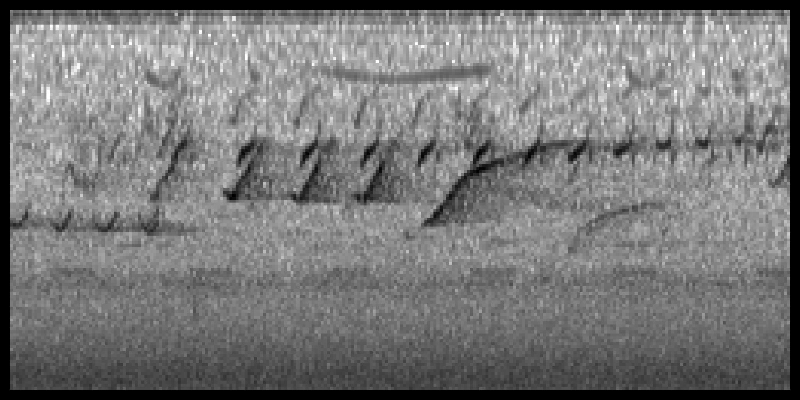
In the realm of bioacoustics, understanding species through their sounds is not just a fascinating pursuit; it’s a crucial aspect of biodiversity conservation. Recently, a groundbreaking study introduced METAPERCH, a novel foundation model that leverages metadata—information like location and time—alongside audio signals to significantly enhance species identification capabilities.
The Importance of Metadata in Bioacoustics
Research has shown that models trained solely on audio recordings often struggle with the complexities of real-world bioacoustic environments. These environments can include a cacophony of sounds, making it challenging to distinguish between similar species. This is where the potential of metadata comes into play. By incorporating metadata as auxiliary supervision signals, METAPERCH allows the model to learn important correlations between species and their environmental contexts, ultimately leading to more robust and adaptable models.
How METAPERCH Works
Using a multi-task learning approach, METAPERCH simultaneously addresses species identification and the prediction of various metadata types. This dual training enables the model to not only recognize sounds but also understand contextual cues, such as when and where those sounds were recorded. For example, a recording from a tropical rainforest will likely contain different species compared to one from a temperate forest, and this information can drastically alter the model’s predictions.
Proven Results Across Diverse Datasets
The effectiveness of METAPERCH was evidenced through extensive empirical studies across 17 bioacoustic datasets. The results indicated an impressive performance boost, as the model made more accurate predictions on species identification tasks, particularly in underrepresented geographic regions. This performance was attributed to the model’s enhanced ability to generalize from limited training data by leveraging metadata.
Applications and Future Directions
METAPERCH is not only a step forward for academic research but has practical implications for conservation efforts. By improving species detection in challenging environments, it opens new avenues for monitoring biodiversity and protecting endangered species. Future work could involve expanding the range of metadata used and integrating more complex environmental data, enhancing the model’s applicability in diverse ecological settings.
In summary, METAPERCH exemplifies how merging traditional audio analysis with rich contextual data can pave the way for advanced ecological monitoring, ultimately making a strong case for the integration of metadata in bioacoustic studies.
Authors: Mustafa Chasmai, Vincent Dumoulin, Jenny Hamer




