Unlocking the Secrets of Living Systems: How Active Matter Physics is Redefining Biology
In a groundbreaking research paper, physicist Nitin Kumar from the Indian Institute of Technology Bombay unveils a fresh perspective on the intersection of physics and living systems. This article focuses on the emerging field of soft active matter physics, which promises to deepen our understanding of biological processes by rethinking traditional physical principles.
The Basics of Soft Active Matter
Imagine trying to describe living organisms using the same principles that explain how a block slides down an inclined plane. Kumar contends that traditional physics has largely excluded these dynamic systems. In contrast, soft active matter physics offers a new framework that considers the 'living' characteristics of systems—things like bacteria swimming, birds migrating, or cells dividing.
Defining Key Terms: From Matter to Living Matter
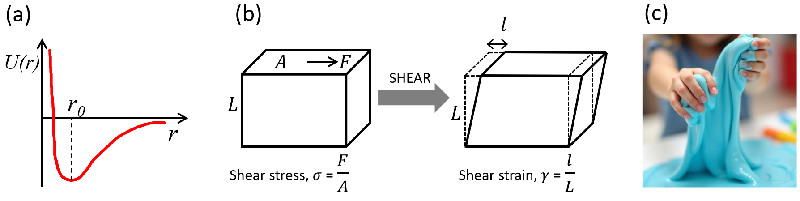
Kumar breaks down complex terminology starting from basic concepts: matter is a collection of atoms or molecules that exhibit unique physical properties based on collective behavior. Divided into categories—solids, liquids, and gases—this understanding expands when we introduce 'soft matter' and then 'active matter.' Soft matter is easily deformable, including items like toothpaste or gels, while active matter encompasses self-propelled systems, both living and non-living.
Why Living Systems Are Unique
What sets living systems apart? While conventional physics can predict the movement of inanimate objects with precision, living organisms operate in unpredictable ways due to their internally driven dynamics. Kumar emphasizes that all living matter is characterized by activity, but not all active matter is alive. This distinction allows researchers to explore a broad range of systems, from biological organisms to artificial entities like robots that exhibit life-like movement.
Unraveling the Dynamics of Motion
The paper also dives into the challenges scientists face when analyzing the mechanics of active and living matter. Unlike passive particles whose movements can be described by Newton’s laws, active particles are influenced by their internal energy and metabolic processes. This makes predicting their trajectory far more complex.
Real-World Application: Robotic Studies on Homing Behavior
To support his thesis, Kumar discusses a study from his research group involving robots designed to mimic the homing and migratory behaviors of living organisms. Using algorithms that simulate random and directed movements, these robots provide a means to analyze the inherent stochasticity in living systems. The findings indicate that the unpredictable routes taken by these robots align remarkably with the natural navigation patterns observed in animals, demonstrating universal statistical traits.
Implications for Future Research
This pioneering approach has significant implications for understanding not just biological systems but also for advancing fields such as robotics and artificial intelligence. By applying concepts of active matter physics, researchers can enhance models of living behavior and might even begin to create more effective artificial organisms.
Conclusion: A New Paradigm for the Physics of Life
Kumar's work encourages a shift in perspective, inviting physicists to rethink how we approach life sciences. As this field grows, it holds the potential to bridge the gap between physics and biology, leading to revolutionary advancements in both scientific understanding and practical applications.
As we stand on the cusp of this scientific frontier, the principles of active matter physics are set to redefine our comprehension of life itself, offering a richer and more nuanced view of the living systems around us.
Authors: Nitin Kumar

