
Unlocking the Underwater Symphony: How AIS-Conditioned Passive Acoustic Data is Revolutionizing Marine Research
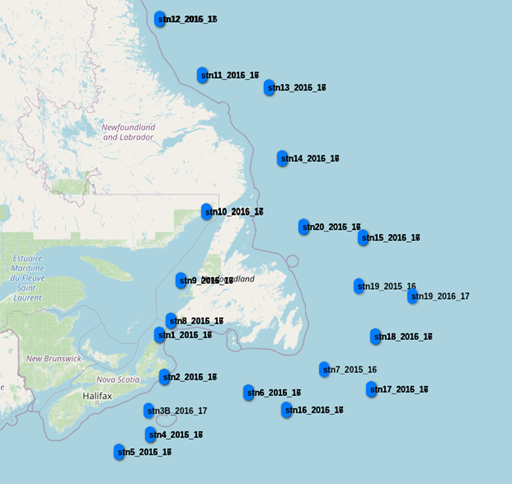
In the field of marine research, passive acoustic monitoring has become a fundamental tool for understanding underwater ecosystems. A groundbreaking research paper from Dalhousie University's Faculty of Computer Science presents a novel approach that redefines how we label and analyze vast amounts of underwater acoustic data. This study illustrates how aligning hydrophone recordings with Automatic Identification System (AIS) position reports can enhance our ability to extract meaningful insights from the aquatic soundscape.
The Challenge of Acoustic Data Without Context
As researchers deploy hydrophones in oceanic environments for long durations, they accumulate an enormous archive of audio recordings. However, a significant limitation has been the lack of linkage between these recordings and the movements of vessels or other contextual variables—factors that are essential for understanding acoustic encounters. Prior approaches often relied on labor-intensive, manual methods that were not scalable, especially when dealing with millions of recordings.
This research proposes a transformative method that leverages a database-native workflow to align these recordings with real-time AIS data. By utilizing indexed spatiotemporal joins, the authors create a robust, scalable system for generating structured, distance-resolved datasets, allowing for easier and more effective analysis.
A New Era of Acoustic Data Analysis
The key innovation lies in replacing the traditional, cumbersome nested iterations over datasets with a more efficient set-based handling of data stored in persistent geospatial tables. This novel construction allows researchers to process extensive datasets—over 9.5 million recordings and nearly 7 million AIS reports—without exhausting available memory. The result is a well-organized table that can be queried based on contact conditions and background noise, ultimately supporting more sophisticated machine learning applications.
An essential finding is that most background acoustic conditions are dominated by noise, with vessel signals emerging predominately at closer ranges. By using this innovative approach, the researchers make significant strides towards extracting structured information about underwater sounds, even in challenging acoustic environments where signals are weakly separated from background noise.
Implications for Machine Learning and Marine Studies
The data produced by this study enables scientists to conduct machine learning analyses under well-defined parameters, setting fixed ranges or background conditions for their experiments. This ability to create datasets that are not just static but can be regenerated based on different conditions opens the door for numerous potential applications—ranging from identifying marine species based on their acoustic signatures to understanding the impact of shipping traffic on marine life.
This research offers the scientific community a greater capability to evaluate acoustic monitoring tools in real-world scenarios, which historically has been challenging due to limitations imposed by existing datasets. By providing a persistent, queryable dataset, the authors aim to boost reproducibility and foster innovation in deep learning techniques tailored for underwater acoustics.
Conclusion: A Foundation for Future Research
The researchers at Dalhousie University have laid a solid groundwork that not only enhances our understanding of marine ecosystems but also equips future studies with powerful data analytics tools. By aligning hydrophone recordings with AIS data, they have opened up new avenues for investigation in marine biology and ecology, making it possible to explore the complexities of underwater soundscapes in ways that were previously unimaginable.
This approach signifies a substantial leap forward, suggesting that with the right tools and methods, we can deepen our comprehension of the ocean's acoustic environments, ultimately aiding in the preservation of our critical marine ecosystems.
Authors: Wayne Renaud, Priyanka Aravindan, Gabriel Spadon




