
Unmasking Cryptocurrency Anomalies: How Complexity Measures Expose Trading Irregularities on Exchanges
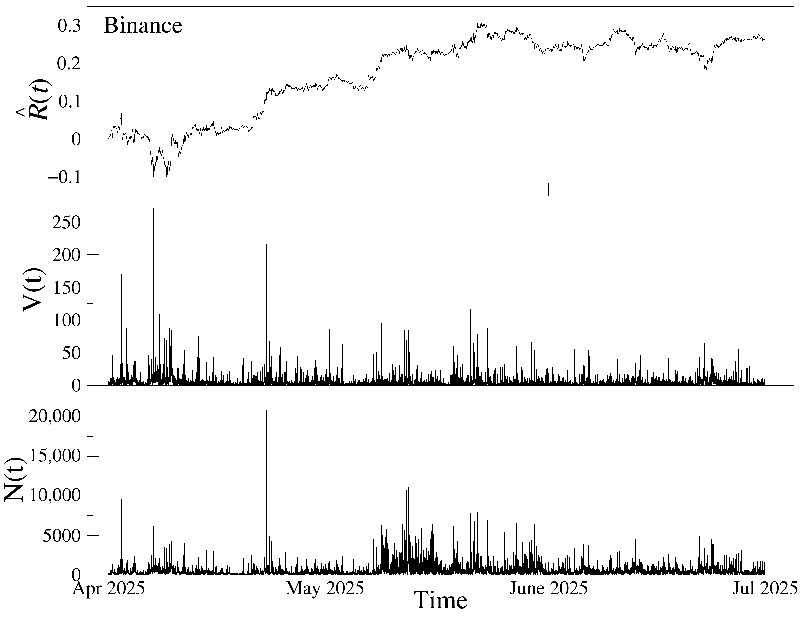
In the fast-paced world of cryptocurrency trading, distinguishing genuine market behavior from manipulative activities is crucial for maintaining transparency and liquidity. A recent study by Jakub Zwydak and his colleagues, titled "Detecting Unusual Trading Patterns on Cryptocurrency Exchanges by Means of Complexity Measures," introduces innovative methods to identify irregular trading patterns that traditional price-based metrics may overlook. This groundbreaking research aims to shed light on market manipulation, particularly the phenomenon of wash trading.
The Threat of Wash Trading
Wash trading refers to transactions that create an illusion of market activity without bearing any real economic risk. Such manipulative practices can misrepresent liquidity, skew market data, and deceive both retail and institutional investors. Recent analyses indicate that cryptocurrency markets are particularly susceptible to these forms of artificial trading activity due to their decentralized and less-regulated nature.
Advancing Detection Techniques
The authors propose a diagnostic framework that employs complexity and statistical-structure measures derived from high-frequency trading data. By analyzing metrics such as log-returns, trading volume, and transaction counts, the team seeks to identify deviations from expected trading behaviors. This approach contrasts with conventional reliance solely on price movements, providing a more nuanced view of market dynamics.
Key Findings
During their research, Zwydak and his co-authors analyzed data from major cryptocurrencies—Bitcoin (BTC), Ethereum (ETH), and XRP—traded on prominent exchanges like Binance, Bitget, Kraken, and KuCoin over a two-month period. Their findings uncovered significant anomalies on the Bitget exchange, particularly for BTC and ETH, starting around mid-May 2025. A rapid increase in transaction counts was observed; however, this surge did not correlate with proportional increases in traded volume or price fluctuations, suggesting gaping inconsistencies within the market structure.
The Role of Complexity Measures
Central to their methodology is the use of complexity measures, which assess the statistical organization of market activity. Through this lens, the researchers could highlight peculiarities in trading patterns, such as irregular autocorrelations and lower multifractal organization. By mapping these complexities, the study establishes that transactions might display characteristics akin to noise rather than genuine trades. Although the findings do not provide conclusive proof of wash trading, they indicate a potential elevation in transaction counts driven by artificial market practices.
Implications for Market Integrity
This research underscores the importance of adopting complexity-based diagnostic tools in cryptocurrency markets to better detect and understand potential manipulative strategies. The findings raise critical questions about the reliability of reported trading volumes and market behaviors, urging investors and regulators alike to reassess the integrity of information derived from exchanges. As cryptocurrencies continue to evolve, implementing robust detection methods will be crucial for maintaining a transparent and fair trading environment.
In summary, Zwydak et al.'s study not only highlights the vulnerabilities of cryptocurrency exchanges to market manipulation but also paves the way for utilizing complexity measures as reliable indicators for identifying trading anomalies.
Authors: Jakub Zwydak, Marcin Włatorek, Jarosław Kwapień, Stanisław Drożdż




