Unpredictable Stars: How SELDON Revolutionizes Supernova Discovery with AI
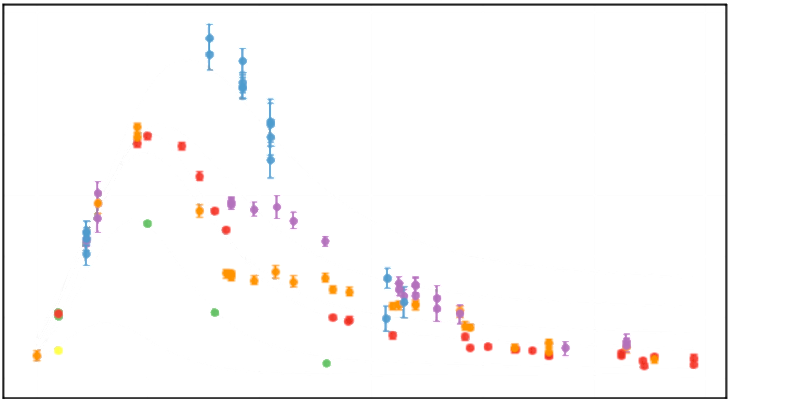
In an age where the universe reveals its secrets at an overwhelming pace, a groundbreaking research paper entitled "fSELDON: Supernova Explosions Learned by Deep ODE Networks" introduces a novel AI-driven approach to monitor and analyze supernova explosions. With the impending launch of the Vera C. Rubin Observatory, it's estimated that around 10 million optical transient alerts will flood in each night. This poses a formidable challenge for traditional data analysis methods, which struggle under such immense data volume. Here, we explore how the SELDON model aims to transform time-domain astronomy.
The Challenge of Data Overload
The anticipated deluge of alerts from the Rubin Observatory presents an urgent need for innovative solutions in handling data. Traditional analysis techniques can take hours—or even days—to process observations for a single supernova. This significantly hampers scientific discovery, especially when faster responses could unlock new insights into the nature of these cosmic events. SELDON offers a solution by delivering millisecond-scale inference capabilities, making it possible to analyze thousands of light curves daily.
What is SELDON?
SELDON, which stands for Supernova Explosions Learned by Deep ODE Networks, uses a unique machine learning architecture to analyze irregularly sampled light curves from supernovae. This innovative continuous-time forecasting AI model harnesses advanced techniques such as a masked GRU-ODE encoder, a neural ODE for state propagation, and an interpretable Gaussian-basis decoder. In simple terms, SELDON can intelligently predict light curves and their behaviors based on partial data, effectively filling in the gaps left by sparse observations.
How It Works
At its core, SELDON processes panels of sparse and irregularly timed light curves that are typically difficult to analyze due to their nonstationary and heterogeneous nature. The model's encoder can summarize complex data, making sense of it even when only a few points are observed. This capability is enhanced by the neural ODE, which predicts how the state of the system evolves over time, allowing it to extrapolate future light curve behavior.
Performance Comparison
In performance tests, SELDON outperformed other models, including traditional masked-GRU and Deep Sets architectures, particularly in critical early predictions when only a small fraction of the light curve is observed. This is crucial, as timely and accurate predictions can significantly influence the scheduling of follow-up spectroscopic observations in astronomical surveys.
A Broader Impact
Beyond its implications for astronomy, the SELDON architecture holds promise for diverse fields that deal with multivariate, sparse, and irregularly sampled data. Its generic yet powerful design could revolutionize predictive modeling in various domains, demonstrating the potential of AI in tackling complex, real-world problems.
As researchers continue to refine and apply this technology, SELDON may very well help astronomers not just keep pace with a data storm, but thrive in the exploration of the universe, uncovering new cosmic phenomena and deepening our understanding of the universe itself.
For those interested in the technical details or implementation, the authors have also made the code available for use at: GitHub - SELDON Code.
Authors: Jiezhong Wu, Jack O’Brien, Jennifer Li, M. S. Krafczyk, Ved G. Shah, Amanda R. Wasserman, Daniel W. Apley, Gautham Narayan, Noelle I. Samia.

