
Unraveling Growth Dynamics: The Groundbreaking Discovery of the Half-Space KPZ Equation!
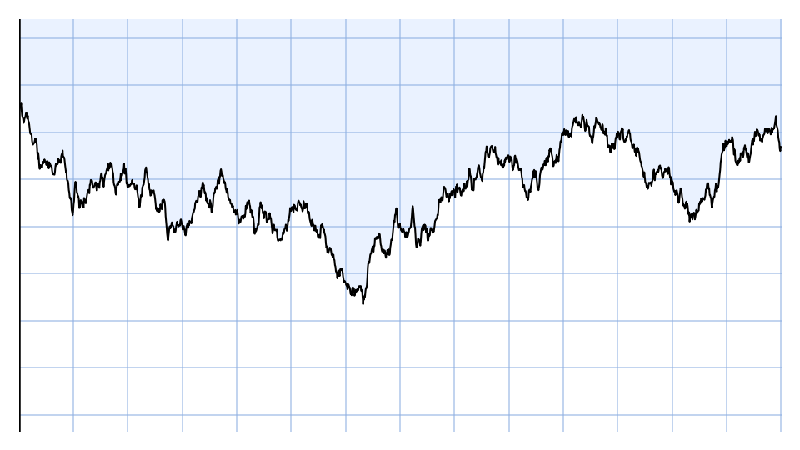
In a significant advancement for the field of stochastic partial differential equations, researcher Kevin Yang has unveiled a new perspective on the half-space Kardar-Parisi-Zhang (KPZ) equation. Published in October 2026, this research represents a vital breakthrough in understanding random interface growth models and their potential applications in both physics and mathematics.
Understanding the KPZ Equation
The KPZ equation is pivotal in describing systems that exhibit random growth, such as the formation of rough surfaces. The half-space variant, which is defined over an infinite substrate with a fixed boundary at one end, is particularly interesting due to its unique boundary conditions. Yang's work extends the universality of this equation to a broader class of models beyond the previously studied integrable ones, suggesting that they too may exhibit similar large-scale behaviors.
Key Contributions: Weak Nonlinearity Scaling
Yang introduces a method to derive the half-space KPZ equation from a general class of Ginzburg-Landau stochastic partial differential equations (SPDEs) under weak nonlinearity scaling. This approach not only demonstrates the equation's universality but also establishes a connection between it and various random growth phenomena observed in real-world systems.
Mathematical Innovations
The methodology developed in this research involves the discretization of the Ginzburg-Landau SPDEs and subsequent continuum limits. Yang’s results offer a comprehensive analysis of the boundary conditions, a crucial aspect often overlooked in previous studies. This is particularly relevant for applications in statistical mechanics and critical phenomena.
An Exciting Future Ahead
As the implications of this study ripple through scientific communities, researchers are encouraged to explore the dynamics of the half-space KPZ equation and its applications. Yang’s findings pave the way for future innovations in understanding complex systems governed by stochastic processes, marking a crucial step in the journey toward fully harnessing the power of stochastic mathematics in modeling real-world phenomena.
Stay tuned as we anticipate further developments and applications arising from this foundational research!
Author: Kevin Yang


