
Unraveling the Future of Bond Investment: Dynamic Strategies to Outperform Traditional Approaches!
In the complex world of finance, managing bond portfolios is a delicate balancing act of maximizing yield while navigating liquidity and interest-rate risks. The traditional static allocation methods can leave investors exposed, especially in turbulent market conditions, as highlighted by the recent banking crises in places like Silicon Valley Bank. A new research paper by Balaji Ramachandran, Srikanth Iyer, and Shashi Jain proposes a revolutionary multi-period bond portfolio optimization strategy that aims to address these challenges using a Markov Decision Process (MDP) framework.
The Motivation Behind the Research
The impetus for this study arose from the fallout of the Silicon Valley Bank collapse, which starkly illustrated the vulnerabilities inherent in holding long-duration securities without adjustment mechanisms. As interest rates rose sharply, these concentrated portfolios faced impending mark-to-market losses, increasing liquidity stress. This research seeks to create a dynamic approach that allows portfolio managers to adjust their bond holdings effectively in response to shifting market conditions.
A Dynamic Approach to Portfolio Management
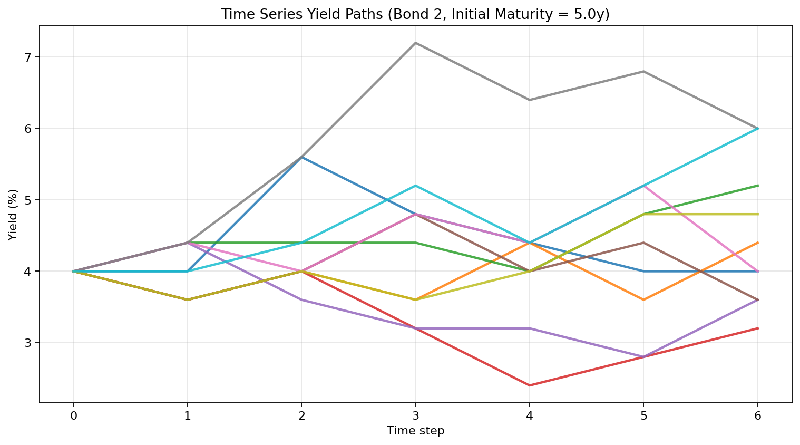
The innovative framework developed by the authors utilizes a simulation-based method to optimize bond portfolio allocation over multiple periods while considering transaction costs and interest-rate risks. By employing the Dynamic Nelson-Siegel model to capture yield curve dynamics, the researchers constructed a time-varying discrete-state Markov chain that helps approximate the yield process across various maturities of bonds.
Through this MDP framework, investors can make sequential decisions on portfolio allocations aimed at maximizing expected terminal wealth. The approach utilizes a process known as backward induction, allowing for the generation of optimal portfolio strategies that respond dynamically to changes in the bond market rather than adhering to a static allocation strategy.
Key Findings from the Study
The results of the paper reveal several important insights:
- Superiority of Dynamic Strategies: The dynamic allocation strategy significantly outperformed traditional methods—specifically an equal-weight buy-and-hold strategy and a static mean-variance optimal portfolio—across all configurations tested. Notably, the improvement in mean terminal wealth ranged from 1.0 to 4.3 percentage points over a six-month period.
- Risk vs. Return: The gains achieved using the dynamic strategy were primarily return-based rather than a consequence of reduced risk. The study found that while expected terminal wealth increased, downside statistics like fifth-percentile wealth and maximum drawdown often did not improve, reflecting the risk-neutral nature of the objective.
- Impact of Transaction Costs: As transaction costs increased, the frequency of trading decreased significantly; yet, the dynamic strategy maintained its economic advantage even at higher cost levels. This highlights a crucial finding: dynamic policies do not simply evolve into static strategies as costs rise.
- Investment Horizon Effects: Lengthening the investment horizon from six to twelve months generally enhanced the performance of the dynamic strategy, allowing for better exploitation of favorable market conditions for rebalancing.
Conclusion and Future Directions
The implications of this research are profound for financial institutions and individual investors alike. The framework presents a clear alternative to traditional bond allocation strategies, one that adapts to the prevailing market conditions, optimizing returns while managing risks more effectively. However, the authors acknowledge specific limitations in their study, especially regarding the discrete nature of action choices and the reliance on simulated data.
Future work will address these limitations, potentially incorporating real-time market data and expanding the model to include more complex bond types and liquidity constraints. As market conditions continue to evolve, employing such a dynamic and responsive bond portfolio strategy could become essential for navigating the complexities of the financial landscape.
With this new research, investors may finally have the tools needed to not only survive but thrive in a rapidly changing bond market.
Authors: {Balaji Ramachandran, Srikanth Iyer, Shashi Jain*}
*Corresponding author(s) can be reached at: shashijain@iisc.ac.in


