
Unveiling ATIBA: The Future of Research Paper Integrity and Quality Assurance
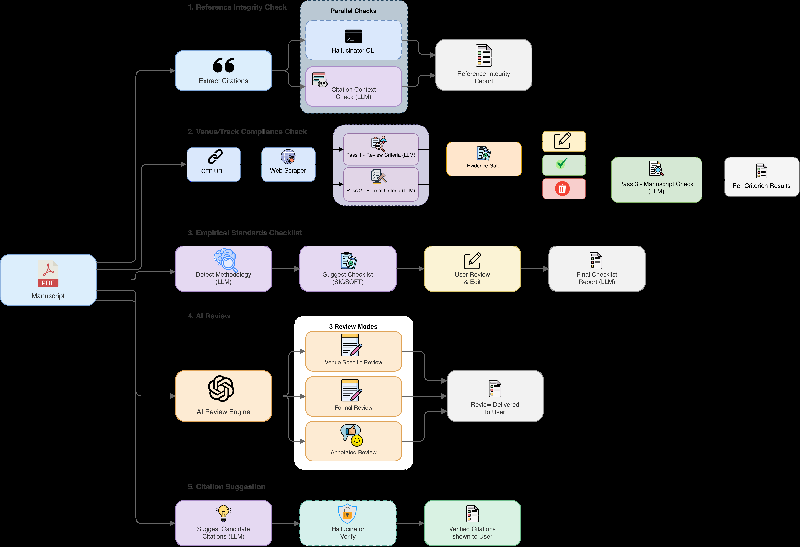
In an era of increasing submissions to prestigious computing venues, the integrity and quality of research papers have never been more critical. The manual processes traditionally used to check references, formatting, and compliance with submission guidelines are often cumbersome and inconsistent. Enter ATIBA, an innovative tool designed to automate and enhance the integrity checks for research papers, ensuring they meet the highest standards before submission.
The Need for ATIBA
Research submissions are up, but so are the challenges associated with verifying the integrity and quality of these manuscripts. Tasks like confirming citations, following specific formatting rules, and adhering to community standards can be overwhelming, leading to inconsistencies. ATIBA addresses these issues by implementing five integral checks that streamline the submission process and reduce the burden on authors.
Core Features of ATIBA
ATIBA leverages advanced technology to provide a comprehensive suite of checks:
- Reference Integrity Check: This feature verifies citations against bibliographic sources, ensuring that each reference is real, accessible, and not retracted.
- Venue Compliance Check: By extracting submission requirements directly from a venue’s call-for-papers, ATIBA meticulously evaluates manuscripts against these criteria.
- Empirical Standards Compliance: ATIBA automates compliance with the ACM SIGSOFT's Empirical Standards, checking methodological appropriateness.
- Multi-mode AI Review: A powered AI review system offers tailored feedback based on venue-specific guidelines, enhancing author understanding of their manuscript’s strengths and weaknesses.
- Context-Aware Citation Suggestions: The tool proposes candidate references relevant to the manuscript while confirming their validity against reliable bibliographic sources.
Grounded Integrity: A Trustworthy Approach
One of the standout features of ATIBA is its commitment to "grounding" its feedback. The tool does not rely on the capabilities of large language models (LLMs) alone; instead, it bases all judgments on independently verifiable sources. This approach significantly reduces the risk of generating misleading or fabricated recommendations, enhancing the reliability of feedback for authors.
Initial Findings and Perceived Usefulness
Initial evaluations through a user study involving 13 participants demonstrated high perceived usefulness. Participants reported that ATIBA helped identify potential integrity issues, verify citations, and ensure compliance with venue-specific requirements. With a mean agreement of 85% on usefulness across various workflows, these findings endorse ATIBA as a promising addition to the research submission landscape.
The Future of ATIBA
While ATIBA marks a significant advancement in automated checks for research papers, the authors acknowledge that establishing objective accuracy in these checks is vital for broader acceptance. As they seek to quantify the tool’s performance through additional evaluations, the ultimate goal remains clear: to facilitate a more systematic, transparent, and efficient manuscript submission process that authors and reviewers can trust.
By combining innovative technology with a commitment to core academic values, ATIBA paves the way for a future where research integrity and quality are upheld with greater ease, making it an indispensable tool for both authors and reviewers alike.
Authors: Veli Karakaya, Semih Çağlar, Yusuf Yiğit Korkmaz, Eray Tüzün




