
Unveiling Financial Market Sentiment: The Power of Transformer-Based Models
In today's fast-paced financial landscape, understanding market sentiment is more essential than ever. A recent research paper by Maria Saveria Mavillonio and colleagues introduces a novel framework for accurately measuring sentiment in financial news using transformer-based language models. This approach promises to enhance the precision of sentiment analysis, directly impacting economic forecasting and market behaviors.
The Challenge with Traditional Methods
Sentiment analysis in financial contexts typically relies on dictionary-based approaches, where sentiment is inferred from specific word counts. Although useful, these methods often miss the nuance of context, leading to oversimplified interpretations. For instance, they struggle with negation—where a positive could become negative simply due to the presence of a negating word. The new research seeks to address these limitations.
Revolutionizing Sentiment Measurement
The research team analyzed over 143,000 financial news articles to classify sentiment at the sentence level using a model called FinBERT, a transformer fine-tuned for financial texts. This method allows for a deeper understanding of sentiment by considering the full context of sentences, enabling more accurate classifications of articles as positive, neutral, or negative.
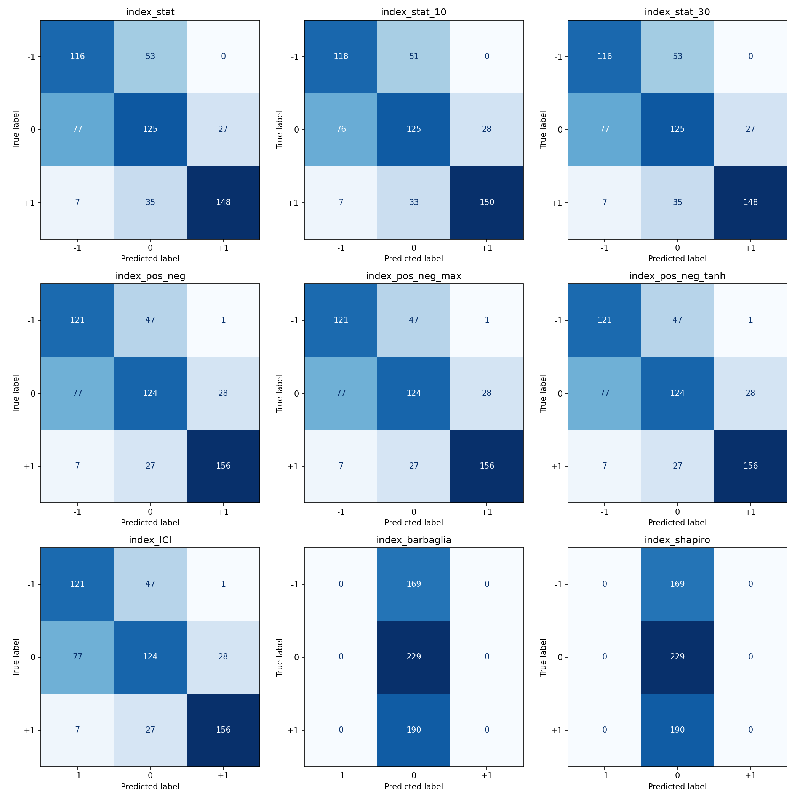
By aggregating these sentence-level classifications into article- and daily-level indices, the researchers developed alternative sentiment measures that more accurately represent market mood compared to traditional dictionary-based indicators. These indices are not just theories; they were validated against human judgments through incentivized annotation exercises, showcasing their reliability.
Key Findings: Enhanced Accuracy in Sentiment Analysis
The key takeaway from the study is that transformer-based sentiment measures show a stronger correlation with human evaluations than their dictionary-based counterparts. For instance, the results indicated that the transformer models not only captured a broader range of sentiments but also distinguished between positive, neutral, and negative content with better precision.
Furthermore, the research highlights the nuanced nature of sentiment in financial reporting, especially in contexts where traditional lexical approaches would likely misinterpret meaning due to rigid reliance on specific word counts.
Implications for Economic Forecasting
Understanding sentiment through these advanced models has significant implications for economic forecasting and decision-making. By revealing underlying sentiment dynamics with greater fidelity, these metrics could inform policymakers and investors, helping them gauge market conditions in real-time. This research underscores the necessity for adopting innovative AI-driven approaches for future analyses in economics and finance.
In conclusion, the transformation of sentiment measurement in financial news through transformer-based models offers not only a methodological improvement but also the potential for deeper insights that could shape market strategies and economic forecasting. As the financial landscape evolves, so too must the tools we use to analyze it.




