
Unveiling the Art of Attention: How Autistic, Neurotypical, and Artist Eyes Differ in Viewing Paintings
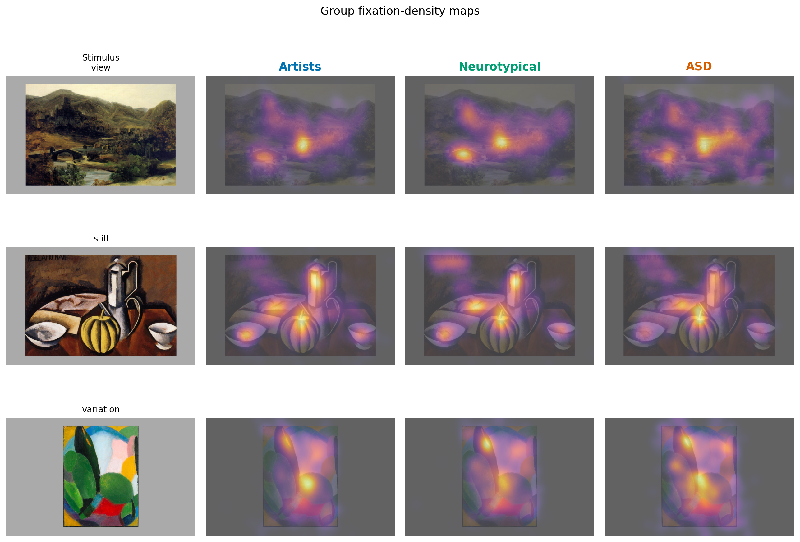
A groundbreaking study has shed light on how different groups — autistic individuals, trained artists, and neurotypical observers — visually explore artworks, revealing unique gaze patterns that could influence cognitive science and accessibility design. This research, led by a team from multiple French institutions, analyzed how these groups attended to thirty paintings, providing sharp contrasts between their artistic viewing habits.
New Metrics for Eye-Tracking Comparisons
The study introduces a sophisticated framework combining both spatial and temporal analyses of gaze patterns. While typical eye-tracking studies often focus solely on where individuals look, this research emphasizes the order and duration of fixations. By utilizing a shared methodology across diverse groups, the findings highlight significant differences in how attention is distributed during art viewing.
Artists and Neurotypicals: A Mirror Image
Interestingly, the research concludes that trained artists and neurotypical observers exhibit strikingly similar gaze patterns, both spatially and temporally. They tend to fixate on the same areas of a painting, indicating a shared approach to visual exploration. The correlation between their gaze paths was exceptionally high, suggesting they view art in much the same way, often influenced by the elements of compositional structure.
Divergent Gaze of Autistic Individuals
In stark contrast, the gaze patterns of autistic participants diverged distinctly from both artists and neurotypicals. While they shared a wide spatial exploration typical of artists, their fixations were shorter and less consistent. This indicates that autistic viewers may not share the same underlying cognitive strategies when engaging with artworks, raising important considerations for how art is presented to accommodate diverse viewing styles.
Implications for Art Accessibility
This research not only advances our understanding of visual attention in art viewing but also calls for more inclusive models of aesthetic attention that consider the unique viewing characteristics of autistic individuals. These insights could inspire new methods for creating art displays and educational resources that cater to a broader audience, fostering an environment where everyone can appreciate and engage with art more fully.
The detailed findings and methodologies used in the study are available to artists, educators, and researchers interested in accessible designs and practices that respect cognitive diversity.
For further inquiries, you can contact the principal author, Mohammed Amine Kerkouri, at m.a.kerkouri@f-initiatives.com.
Authors: Mohammed Amine Kerkouri, Daphné Senggaran, Renaud Jusiak, Océane Lehmann, Marouane Tliba, Claire Wardak, Emmanuelle Houy-Durand, Shasha Morel-Kohlmeyer, Aladine Chetouani, Nadia Aguillon-Hernandez




