
Unveiling the Dynamics of Active Turbulence: A New Criterion for Control in Biological Flows!
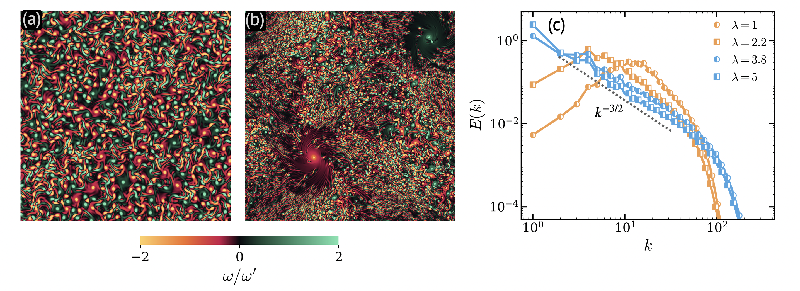
In a groundbreaking study, researchers have identified a novel criterion that reveals the onset of universal active turbulence, a fascinating phenomenon seen in dense aggregates of self-propelled organisms like bacteria. This new insight could transform our understanding of biological flows, which are fundamentally different from traditional fluid dynamics.
What is Active Turbulence?
Active turbulence refers to chaotic fluid flow produced by self-propelling entities, such as bacteria or motor proteins. Unlike traditional fluids driven by inertia, these biological systems exhibit complex dynamics due to their inherent activity. Despite operating under negligible inertia, active turbulence produces striking patterns, complicating how we understand fluid behaviour in biological contexts.
The Reynolds-like Control Parameter
In their research, Kunal Kumar and colleagues introduced a Reynolds-like control parameter that helps quantify when a system transitions into a state of universal active turbulence. By adjusting factors such as active driving strength and nonlinear advection, the team found that these adjustments could lead to chaotic flow patterns typical of strong biological activity.
The critical insight is that various paths can lead to the same universal state, reflecting a balance among competing dynamical processes. The relationships among the parameters controlling these flows indicate that a singular dimensionless group can predict the conditions required to achieve active turbulence.
Implications for Biological Systems
This finding is particularly significant for understanding complex biological systems where changes occur simultaneously across various parameters, such as in dense bacterial colonies or during cellular movements in tissues. By employing this new Reynolds-like measure, researchers can better compare systems that may vary widely yet reach similar turbulent behaviours.
Moreover, understanding this transition to universal active turbulence could aid in developing better models for phenomena in biology, ecology, and even in engineered systems that mimic these active structures.
Conclusion: A Step Towards Unifying Fluid Dynamics
The study not only sheds light on fundamental mechanisms governing active turbulence but also opens avenues for broader inquiry into how universal behaviors emerge in various complex systems. As researchers continue to explore the implications of this newly defined criterion, we anticipate more refined models of both natural and artificial active flows.
In summary, this novel perspective on active turbulence, framed by a Reynolds-like approach, promises to enhance our grasp of fluid dynamics in diverse biological contexts, illustrating a remarkable interplay between activity and fluid mechanics.
Authors: Kunal Kumar, Sandip Sahoo, Kirti Kashyap, Amal Manoharan, Siddhartha Mukherjee, Anupam Gupta, Samriddhi Sankar Ray


