
Unveiling the Future of AI Auditing: The Dice Roll Method for Reliable Brand Recommendations
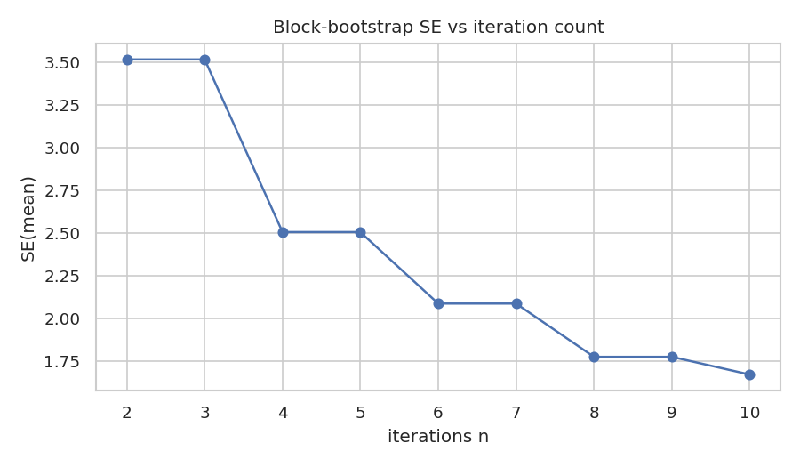
In a groundbreaking study, researchers have introduced the Dice Roll Method, a standardized protocol designed to improve the reliability of auditing brand recommendations from large language models (LLMs). This innovative approach is essential as AI-generated outputs become increasingly prevalent in our digital landscape, demanding more rigorous evaluation techniques.
The Challenge of Language Model Variability
Large language models, such as GPT-5.2, exhibit inherent variability when prompted with the same questions multiple times, producing different outputs each time. Researchers, led by Dmitrij Zatuchin from the Estonian Entrepreneurship University of Applied Sciences, aimed to tackle this stochastic nature and create a systematic method for auditing LLM outputs. The Dice Roll Method draws parallels from the probabilistic process of rolling a die to ensure that each query helps in accurately assessing the distribution of responses across multiple iterations.
A Rigorous Methodology for Reliable Results
The study meticulously outlines a protocol that emphasizes the determination of iteration counts and the selection of stability metrics to enhance measurement reliability. By breaking down total response variance into specific components—including token-level sampling variance and prompt phrasing—the researchers provide a robust analytical framework. This framework uses an innovative approach combining negative-binomial generalized linear mixed models (GLMM) and simulation-based power analysis. Such a comprehensive method is purposefully designed to confront the unique challenges presented by LLM outputs.
Key Findings: From Iteration Counts to Statistical Power
The research yielded insightful recommendations regarding the necessary number of iterations for effective brand recommendation audits. The authors established three distinct tiers of iteration guidance:
- Exploratory studies: Require a minimum of 5-7 iterations (G ≈ 0.58).
- Confirmatory studies: Suggest 10-12 iterations, achieving G ≈ 0.74.
- Rigorous studies: Advise 15-20 iterations for maximum reliability (G ≈ 0.81).
Such detailed recommendations empower researchers and practitioners to make informed choices tailored to their specific auditing goals, drastically improving measurement accuracy.
The Broader Implications
As the use of LLMs continues to infiltrate various sectors—from marketing to customer service—the implications of this research extend beyond academia. Zatuchin articulates that the reproducibility and precision engendered by the Dice Roll Method can not only improve brand audits but also enhance the overall trustworthiness of AI systems. By providing statistically robust methodologies, this protocol promises to fortify the foundations of AI-generated content evaluation.
Conclusion: A New Era of AI Auditing
The Dices Roll Method signifies a pivotal shift in how AI brand recommendations are audited, transitioning from intuitive, heuristic-driven approaches to scientifically grounded protocols. As scrutiny of AI technologies rises, adopting standards like these in the industry will be critical for ensuring ethical and reliable AI practices.
This research opens avenues for future studies, inviting researchers to apply these rigorous methodologies across varied contexts and explore their implications for broader AI-related challenges.
For further inquiries regarding the implementation of the Dice Roll Method, contact Dmitrij Zatuchin.




