
Unveiling the Future of Forecasting: How HINDCAST Rethinks Evaluating Large Language Models
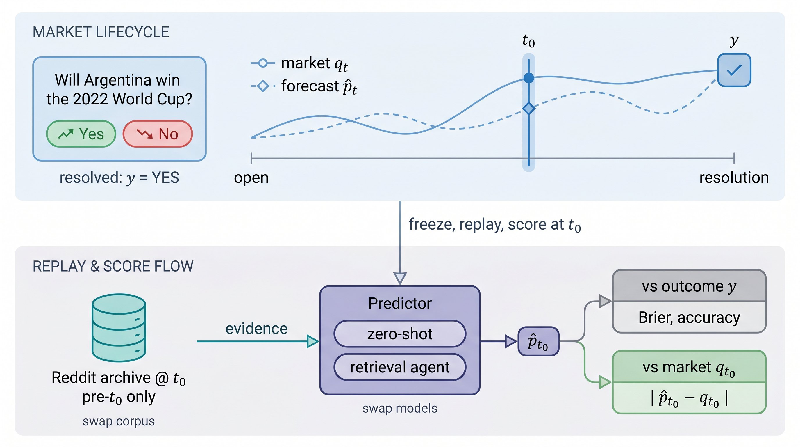
In a groundbreaking research paper titled "HINDCAST: Replaying Prediction Markets to Evaluate LLM Forecasters," a team from Arizona State University has introduced a novel approach to evaluating the predictive capabilities of large language models (LLMs). The method, referred to as HINDCAST, tackles the issue of assessing how well these models can forecast outcomes based on historical data without falling prey to hindsight biases or post-event information leakage.
The Problem with Current Evaluations
Traditionally, evaluating forecasting models has relied on backtesting, which often uses resolved questions to measure the accuracy of predictions made before the actual outcomes were known. Unfortunately, this typical process can unintentionally allow models to access "leaked" information which could bias results. For instance, a model trained on data that includes post-event articles might unwittingly use that information to make its predictions, making it look deceptively accurate. A clear example is forecasting event outcomes like sports championships where models can simply "lookup" responses from data collected after the event.
What is HINDCAST?
The innovative solution offered by HINDCAST involves creating a controlled evaluation environment that freezes public data as a "snapshot" of the past. This takes place before any event resolutions, enabling fair assessment of how well a language model could have predicted an outcome based solely on information available at that earlier time. By utilizing past data from prediction markets and limiting retrieval to specific, pre-set time windows, researchers can now accurately measure the predictive foresight of these models.
How Does HINDCAST Work?
HINDCAST leverages existing data from platforms like Reddit while simultaneously locking in that data against a timeline of events. This allows the evaluation of LLM predictions based on relevant content that was genuinely available before the resolution date. The results show that leveraging archived posts from platforms like Reddit, discussing events before they happened, greatly enhances the model's ability to make accurate predictions. Additionally, unlike previous live benchmarks that often become outdated, HINDCAST allows for continuous re-evaluation of new models against the same past data, maintaining its relevance over time.
Key Takeaways from the Research
One of the most compelling findings from this study is that while retrieval of past evidence generally improves forecasting accuracy, it must come from actual discussions regarding the event rather than pure speculation. Models performing best under HINDCAST were those that utilized historical conversations anchored in fact, demonstrating the importance of quality data in AI-learning processes.
Ultimately, HINDCAST is set to revolutionize how we assess predictive models for various applications, ranging from financial forecasting to political predictions. By eliminating leakage in evaluations and providing a coherent framework that evolves as models advance, this method empowers researchers and developers to harness the full capabilities of LLMs while maintaining ethical standards in AI assessments.
In summary, the introduction of HINDCAST represents a significant step forward in the realm of AI forecasting, allowing a fairer evaluation process that can adapt as language models continue to improve. This work not only enhances our understanding of how well these models can predict future events but also provides important insights into the methodologies that should be employed for responsible AI development.
Authors: Xiao Ye, Jacob Dineen, Evan Zhu, Shijie Lu, Kevin Song, Ben Zhou, Arizona State University




