
Unveiling the Future of Horticulture: How SG-AMP Enhances Robotic Perception and Motion Planning for Pepper Plants
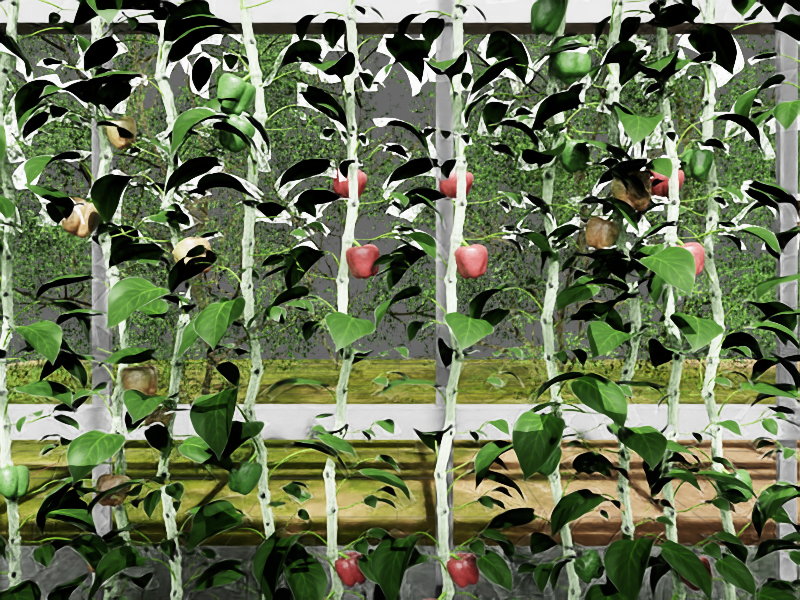
As the world moves toward an era of smart agriculture, the intersection of robotics and horticulture is becoming increasingly vital. A recent study introduces SG-AMP, a groundbreaking approach designed to improve the way robots perceive and interact with dense pepper plant environments. This innovative technology integrates advanced perception techniques and smart motion planning, enabling robots to navigate through the intricacies of horticulture with unprecedented efficiency.
The Challenge of Dense Horticulture
Robots tasked with inspecting and harvesting crops in densely packed areas, like pepper plants, face multiple challenges. They must not only detect visible fruits but also navigate around occluded structures such as stems and leaves. In many cases, traditional RGB-D imaging proves inadequate because it does not provide full visibility of the plant structures. The SG-AMP approach tackles these hurdles by utilizing active sensing techniques to enhance environmental perception and planning.
Key Innovations in SG-AMP
The SG-AMP framework showcases several novel contributions that set it apart from previous methods, including:
- Robust Depth Completion: Utilizing advanced algorithms that work with noisy input data, SG-AMP efficiently restores depth information to fill in gaps in observations.
- Persistent Panoptic Mapping: This feature creates a multi-resolution 3D map of the environment, allowing the robot to maintain an up-to-date representation of the pepper plants over time.
- Scene-Graph Hypotheses: By hypothesizing potential plant structures that the robot cannot currently see, SG-AMP directs the robot's close-range sensing towards these locations, enhancing the overall inspection process.
- Semantics-Aware Motion Planning: This innovative planning incorporates the semantic understanding of the plant structures, reducing the risk of damaging vital parts such as fruits and stems during navigation.
Improved Outcomes for Robotic Perception
The results from testing SG-AMP on real pepper plant data are promising. The perception network achieved a remarkable 55.27% semantic mean Intersection over Union (mIoU) and an average depth Root Mean Square Error (RMSE) of just 40.62 mm. These metrics illustrate the effectiveness of the approach in accurately perceiving plant structures despite the inherent challenges of the environment.
Future Implications and Applications
As the agricultural sector evolves, the implications of innovations like SG-AMP extend beyond pepper plants. This technology could pave the way for more efficient harvesting practices across a variety of crops, optimizing the labor required in agricultural settings. Furthermore, the integration of robotics in horticulture can lead to higher yield efficiency and lower environmental impact by enabling precise interventions where and when needed.
In conclusion, SG-AMP represents a significant leap forward in the application of robotics in horticulture. By enhancing the perception and motion planning capabilities of robots operating in complex environments, researchers are setting the stage for a future where technology supports sustainable agricultural practices.




