
Unveiling the Mechanics: How Cell Size and Confinement Ignite Asymmetric Division in Embryogenesis
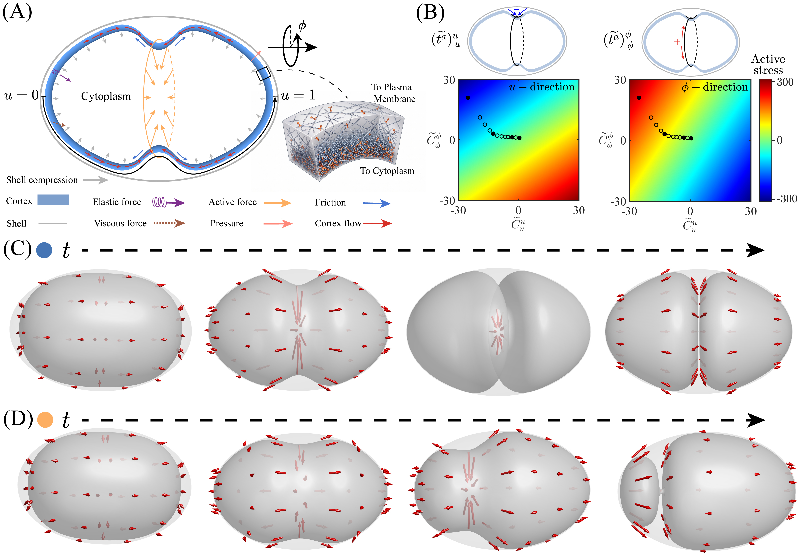
A groundbreaking study sheds light on the mechanisms behind asymmetric cell division, a process fundamental to the development of multicellular organisms. Researchers Da Gao and colleagues reveal how curvature-dependent active stresses can trigger this asymmetry even in unpolarized mother cells, driven by their size and mechanical confinement within a restricted space.
The Basics of Asymmetric Cell Division
Asymmetric cell division is when a single mother cell divides into two daughter cells that differ in size and volume. This process is essential for various biological outcomes, including tissue architecture and cellular diversity. Traditionally, scientists thought that this division relied heavily on polarity cues within the mother cell. However, this new research suggests that basic physical constraints play a significant role.
A New Perspective on Cellular Mechanics
The researchers demonstrated that when mother cells are confined in a small space, curvature-induced active stresses can spontaneously break symmetry during division. This means that modifying external conditions—like the size of the cell or how tightly it is confined—can unexpectedly lead to cells dividing asymmetrically.
Experimental Findings: Insights from C. elegans
The team conducted simulations and compared their predictions with experimental data obtained from the early embryogenesis of Caenorhabditis elegans (a commonly studied nematode). They found that as these cells shrink size-wise during division, the asymmetry in division increases correspondingly. Moreover, placing embryos under mechanical compression intensified this asymmetry, demonstrating a clear link between physical constraints and cell behavior.
Implications for Developmental Biology
This research not only challenges long-held beliefs about the drivers of asymmetric cell division but also emphasizes the importance of mechanical factors in developmental biology. Understanding these mechanics could pave the way for deeper insights into embryonic development and related fields, such as cancer biology, where asymmetric division patterns may contribute to tumorigenesis.
Conclusion: A Step Toward Understanding Biological Complexity
By revealing the interplay between cell size, mechanical confinement, and symmetry-breaking processes, this study opens up new avenues for research in cellular biology and developmental science. The findings underscore that geometry and physical forces play as crucial a role in cell division outcomes as molecular signals.
As researchers continue to unravel the complexities of life at the cellular level, the implications of this study will likely resonate across various domains, enhancing our understanding of both normal development and disease states.
Authors: Da Gao, Guoye Guan, Chao Tang, Rui Ma




