
When the Gate Matters More: Revolutionizing Hardware Prefetching with Confidence
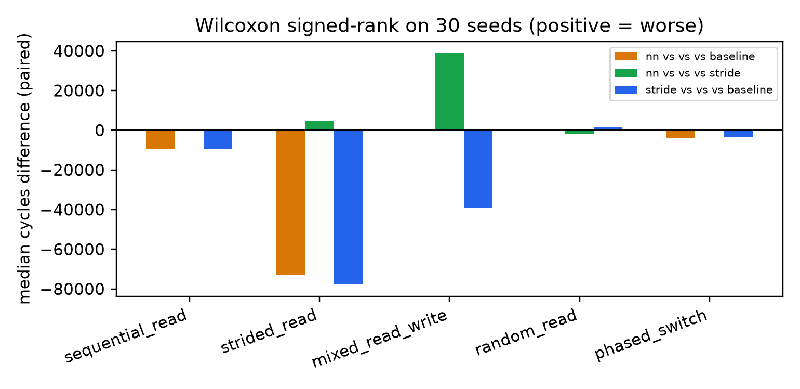
In a groundbreaking study, researchers from Algorithmica Solutions have redefined our understanding of cache prefetching by focusing on how the admission mechanism—a "confidence gate"—can significantly influence performance, often more than the prediction model itself. Their research, titled fConfidence-Gated Admission for Hardware Prefetching: When the Gate Matters More Than the Predictor, highlights that admissions policies can make or break the effectiveness of prefetchers in modern computing systems.
The Problem with Current Approaches
Traditionally, hardware prefetchers have relied on classical predictors that consistently issue prefetch requests, leading to a conflation of the admission policy with the predictor's efficiency. This often creates an illusion of superiority for complex learned models when, in fact, the actual gate mechanism that allows or disallows prefetching plays a crucial role in overall performance. The inherent danger is that evaluations can be misleading, prompting designers to draw incorrect conclusions about which models perform better.
Key Findings: Isolating the Admission Policy
The research utilized a matched-control design, applying the same admission gate to both a machine learning-based prefetcher and a traditional stride predictor. This innovative approach showed that when a confidence gate was employed, the neural advantage of the machine learning model faded significantly compared to classical predictors under normal workloads. For example, while a neural network appeared to be beneficial in low-randomization scenarios, when effective gating was applied, the difference in performance between the learned and stride-based predictors became negligible.
The Importance of a Confidence Gate
The study's authors demonstrated that a confidence gate is not just beneficial; it is essential. By applying this gate, they reduced unnecessary prefetches by an impressive 35% while also increasing accuracy from 11% to 15%. Notably, this reduction in prefetches did not create a bottleneck in DRAM reads, a common concern with aggressive caching strategies. The employment of such gates can ultimately safeguard against performance drops in non-learnable traffic streams.
Implications for Future Computing
This research has significant implications not just for cache design and hardware architecture but also for broader fields such as large language model inference (LLM). The study indicates that effectively managing prefetching through confidence gating could enhance the performance of LLMs that cycle between predictable patterns and irregular workloads, thus striking a balance between maximizing data retrieval efficiency and minimizing bandwidth usage.
A Call for a Paradigm Shift
As the demand for performance increases in chip design, the findings from this research advocate for a critical reevaluation of how prefetchers are designed and tested. The authors emphasize that understanding the role of admission mechanisms is key to developing future-proof computing architectures, suggesting that performance evaluations should incorporate matched-control designs to appropriately separate predictor performance from admission policies.
In summary, as we continue to push the limits of computing efficiency, the research by Majdane, Casartelli, and Lopedoto illustrates that sometimes, the gatekeeping mechanism that decides what gets into the cache can matter much more than the complex algorithms behind predicting what should be pre-fetched.
Authors: Youssef Majdane, Simone Jarno Casartelli, Enrico Lopedoto




