
Why Benign Fine-Tuning Could Be Sinking Your AI's Safety: A Deep Dive
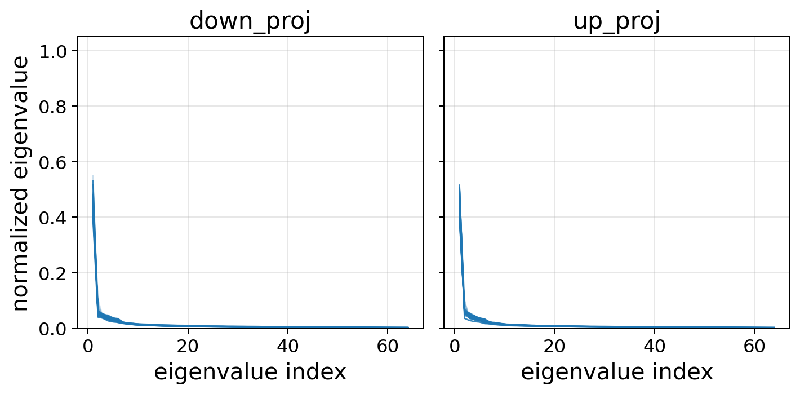
Recent research has spotlighted a critical vulnerability in large language models (LLMs): the fragility of their safety alignment under benign fine-tuning. Scientists at Indiana University Bloomington and Tsinghua University conducted a comprehensive study to explore this issue, revealing that even harmless adjustments to AI can destabilize its ability to refuse harmful requests.
The Core Problem: Fragile Safety Alignment
At the heart of this research is a key question: why does safety alignment, which ensures AI refuses dangerous commands, break so easily? The traditional explanation points to 'gradient conflict,' where fine-tuning alters internal parameters in ways that disrupt safe behavior. However, the researchers found that this explanation falls short when empirical testing shows safety degradation occurs even without conflicting samples.
Instead, the study proposes a 'Fisher-geometric' explanation. It suggests that safety alignment relies on a low-dimensional pathway within the neural network that routes harmful representations. During benign fine-tuning, this pathway becomes increasingly fragile, leading to a substantial rise in attack success rates—up to 85% in some cases—while general performance erodes only slightly. This discrepancy indicates that safety and utility operate on fundamentally different curvatures in the model’s configuration.
The Mechanics of Safety and Utility
According to the study, safety behavior is tightly controlled through 'output-side routing' mechanisms, where harmful representations are meant to trigger refusal. Post-pretraining, there's a local geometry that preserves this routing. However, benign fine-tuning sharpens late output modules, making them susceptible to small updates that can dramatically shift their function. While utility outputs are only mildly affected, the safety mechanisms suffer a pronounced decline.
Despite this, the findings carry a promising implication: just a few safety-focused samples can restore the AI's refusal abilities, implying that the internal representations crucial for maintaining safety remain intact even after fine-tuning.
Potential Solutions: Early Mitigations and Their Limits
The research revealed that methods like LoRA and ASAM can help mitigate the sharp increases in attack success rates during initial fine-tuning stages. These techniques work by suppressing output-side sharpness, which protects safety alignment to some extent. However, these safeguards weaken as the amount of fine-tuning data increases, emphasizing the need for more robust long-term strategies to maintain safety integrity.
The Road Ahead: Rethinking Alignment Paradigms
Ultimately, the researchers assert that robust alignment methods need to move beyond merely adjusting how we fine-tune models. They propose a future in which safety constraints are embedded deeper within the model’s architecture to avert the issues highlighted in this study. By enhancing the structure and distribution of safety mechanisms, the AI could function optimally without succumbing to the pitfalls of benign fine-tuning.
The findings from this research not only offer important insights into the evolving landscape of AI safety but also underline the urgent need for new methodologies that can effectively safeguard against emerging vulnerabilities without compromising overall model performance.
Authors: Yitong Guo, Xiaoyi Chen, Siyuan Zhang, XiaoFeng Wang, Haixu Tang




