
Women Rising in Science: Unraveling the Matilda Effect Over 125 Years
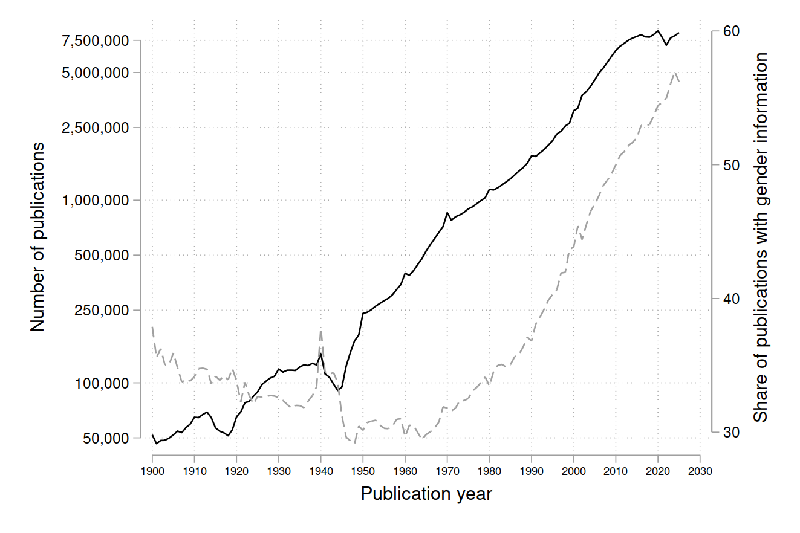
A groundbreaking study conducted by researchers Felix Bittmann and Lutz Bornmann sheds light on an intriguing pattern in the history of women’s participation in science: the Matilda effect. This phenomenon refers to the systematic under-recognition of women's contributions in scientific literature. Through analysis of over 220 million publications from 1900 to 2025, the researchers reveal not only the historical trends in female authorship but also how the dynamics have shifted over the past century.
The Matilda Effect Explained
The Matilda effect highlights a glaring gender disparity that, until recent decades, has hindered women's representation, particularly in leadership roles within scientific publications. Historically, even as the participation of female authors rose—growing from around 10% in the 1910s to over 40% today—their contributions as corresponding authors (often viewed as the lead authors on research papers) were disproportionately lower. This study uses data from the OpenAlex database, allowing for a robust examination of gender representation across numerous fields and time periods.
Key Findings: Patterns and Progress
The analysis indicates a significant change in the landscape of academic authorship. For most of the 20th century, women were underrepresented in corresponding authorship roles. Notably, from 2004 onwards, there has been a shift, with women increasingly occupying these positions—an emerging trend indicative of a decline in the Matilda effect. This transition offers an encouraging glimpse into the evolving recognition of women’s contributions in scientific research.
Disciplinary and Geographic Disparities
However, the growth of female authorship is not uniform across disciplines. The health sciences show promising trends, nearing gender parity, while the physical sciences lag significantly behind, indicating persistent barriers. Regionally, Latin America experiences near parity in female authorship, while several Asian countries still exhibit a stark male dominance in lead roles. The study emphasizes how academic and cultural contexts influence these disparities, offering a nuanced view of gender representation in science.
Historical Waves of Change
Interestingly, the study reveals historical fluctuations in female authorship often corresponding with global events. During World War I and II, for example, women temporarily filled academic roles left vacant by men, leading to spikes in female participation. However, these gains were frequently rolled back post-conflict as men returned to reclaim their positions. This cyclical nature highlights both the resilience and the continuing challenges faced by women in science.
Looking Ahead: A Call for Continued Monitoring
While the downward trend in the Matilda effect is promising, Bittmann and Bornmann stress the importance of ongoing monitoring and evaluation. Given that we are witnessing a pivotal moment in the fight for gender equality within the academic realm, understanding these dynamics can help further illuminate paths for equitable representation. As female participation rises, the scientific community must remain vigilant to ensure that recognition follows suit.
In conclusion, this study not only tracks the evolution of female participation in science but also calls attention to the factors that continue to shape this important narrative. With the right policies and societal shifts, we can pave the way for a more inclusive future in scientific research.
Authors: {Felix Bittmann, Lutz Bornmann}




