An Historic Victory: One Nation Party Secures First Lower-House Seat
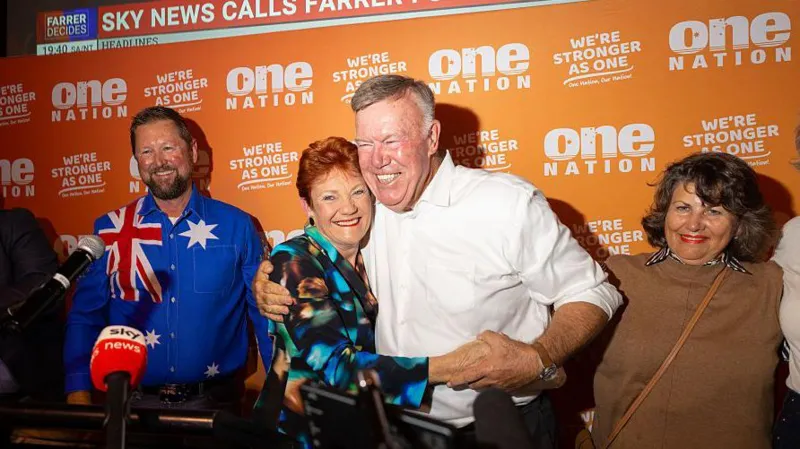
In a significant political breakthrough, Australia's One Nation party has claimed its first-ever lower-house seat, indicating a shift in voter sentiment towards alternative political options. David Farley, the party's candidate, achieved an impressive 60% of the primary vote in Farrer, a vast region in New South Wales, marking a pivotal moment for the right-wing populist party.
A Shift in Australian Politics
This victory comes in the wake of a resignation from former MP Sussan Ley and reflects a growing trend of disillusionment with traditional political parties. As party leader Pauline Hanson articulated, this win symbolizes a broader victory for Australia, asserting that One Nation is prepared to challenge the established political order, moving beyond a singular constituency.
Changing Voter Dynamics
The result serves as an indication that voters are increasingly seeking representatives who align more closely with their views, especially after One Nation recorded significant support in recent local elections. Farley, who has roots in agribusiness, expressed hope that this represents a new beginning for the party, noting, "We're re-carving the letters into the Australian democracy."
Implications for Future Elections
The One Nation party's emergence from obscurity into a federal lower house seat not only highlights shifting voter preferences but also poses challenges for the existing Liberal-National coalition. As traditional parties navigate their internal conflicts and reevaluate their approaches, this election outcome could signal a changing landscape in Australian politics, one where community-driven candidates may gain increasing prominence.
As the political environment continues to evolve, this victory may pave the way for more diverse representation and ongoing debates about the future direction of governance in Australia.

