Brightening the Night: NASA's New Insights on Light Pollution Reduction
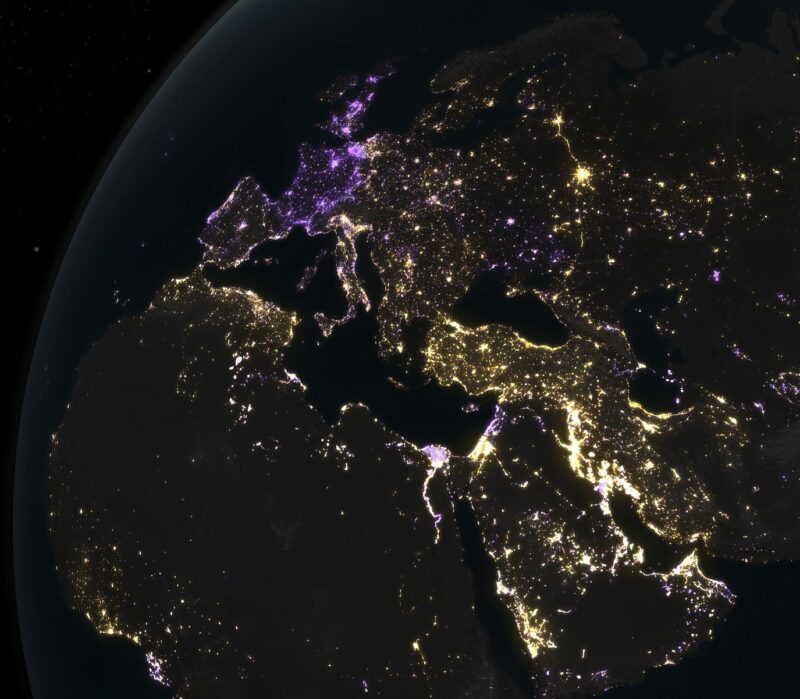
In an encouraging development for environmental awareness, NASA has unveiled new global maps illustrating significant changes in light pollution from 2014 to 2022. This update, part of NASA's Black Marble project, offers a glimmer of hope, showcasing areas where lighting has dimmed, reflecting successful conservation efforts and the adoption of energy-efficient technologies.
Positive Trends in European Light Pollution
The data reveals that regions in northwestern Europe are experiencing a reduction in nighttime lighting. Remarkably, places like Paris, the U.K., and the Netherlands have seen substantial dimming, with the respective decreases of 33%, 22%, and 21%. These improvements are attributed to the widespread use of LEDs and the implementation of energy conservation measures, demonstrating how effective policy changes can contribute to a healthier environment.
The Reversibility of Light Pollution
One of the most promising aspects highlighted by NASA is that light pollution is reversible. Communities around the globe can implement practical steps to reduce their light footprint. This includes simple actions such as limiting outdoor lighting, using warm-colored LEDs, ensuring lights are directed downwards, and installing motion detectors to activate illumination only when necessary. Such changes not only enhance our night skies but also encourage wildlife preservation and contribute to broader environmental goals.
Conclusion
The release of these maps serves as a crucial reminder that collective actions yield significant environmental benefits. While challenges like increased urban lighting persist in certain areas, the progress seen in others is an uplifting sign of what can be achieved. By taking proactive steps at home and beyond, individuals and communities can continue to mitigate light pollution, thereby allowing us to savor the beauty of our night skies once more.

