One Nation's Historic Win: A Game Changer in Australian Politics
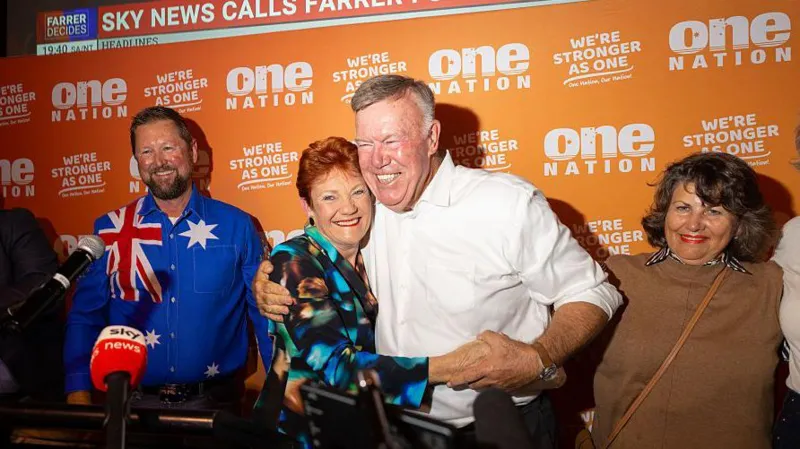
In a significant milestone for Australia's political landscape, the One Nation party has secured its first-ever lower-house seat, marking a pivotal moment for the right-wing populist movement. David Farley, the party's candidate, achieved an impressive 57% of the votes in the Farrer constituency, defeating independent candidate Michelle Milthorpe, who garnered nearly 43%. This victory is not only a triumph for the party but also serves as a reflection of shifting voter sentiments away from traditional political affiliations in the country.
Shifting Dynamics in Australian Politics
This election outcome comes in the wake of former Liberal Party leader Sussan Ley's resignation, paving the way for a contest that clearly indicates a burgeoning discontent among voters regarding established parties. One Nation leader Pauline Hanson expressed her excitement by stating that this win is not just for Farrer but for all of Australia, hinting at the party's broader ambitions to expand its influence across the country.
An Evolving Political Landscape
Farley's victory is regarded as a crucial test of One Nation's support, especially following the party's strong performance in the recent South Australian state elections. Notably, Farley, who brings experience from the agribusiness sector, emphasized that the party has reached a new phase of its journey, stating, "We're going through the ceiling," as he rallied his supporters with a vision of redefining Australian democracy.
Voter Sentiments and Future Implications
The election results underscore a significant transformation in Australian voter behavior, with a growing number expressing skepticism towards the major political parties. Farley himself noted a sense of betrayal, highlighting a common sentiment among constituents who feel that politicians often fail to deliver on their promises once in office.
As Australia navigates through this changing political climate, the implications of One Nation's ascent could be far-reaching, challenging the dominance of traditional political factions and fostering a renewed dialogue about the future of governance in the nation. The upcoming months will be critical as the party's leaders aim to capitalize on this momentum and possibly reshape the parliamentary landscape in Australia.

