
Record Wheat Harvest in Israel: A Boon for Farmers and Food Security
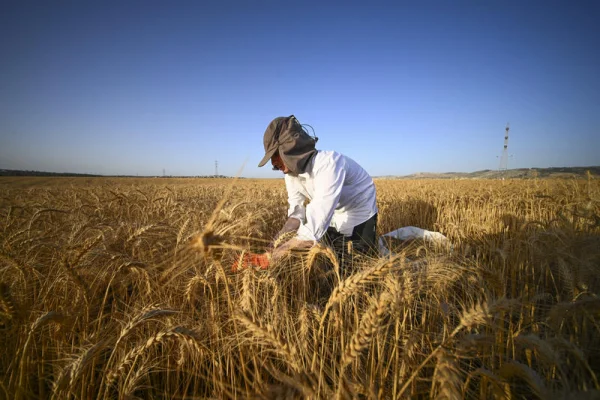
This year, Israeli farmers are set to witness an unprecedented wheat harvest, with predictions indicating a yield of 140,000 tons—far surpassing the average of 80,000 to 100,000 tons. This impressive increase reflects a successful growing season marked by optimal rainfall that has crucially supported crop quality and quantity.
A Promising Agricultural Future
The Ministry of Agriculture attributes this year's remarkable yield to well-distributed rain throughout the season, especially benefiting the Negev region, where 70% of the nation’s wheat is grown. In total, around 450 milliliters of rainfall has drenched the area, ensuring that the seeds germinated properly and matured under ideal conditions.
Experts have noted that this year's harvest could be 55% larger than the average, providing much-needed relief to farmers following a difficult winter. Moreover, the quality of the wheat is reported to be exceptional, allowing Israel to enhance its grain storage capacity, which is crucial for food security.
Impacts on Food Security and Local Agriculture
Yuval Lipkin, head of the Agriculture Ministry's Food Security Administration, emphasized the strategic importance of wheat for Israel's food security. He noted that the current situation bodes well for the future of Israeli agriculture, telling how vital it is for the country to bolster local production and enhance supply chains amidst an uncertain global context.
This triumph in wheat production also resonates with the historical significance of agriculture in Israel, which has been central to its culture and economy since ancient times. Farmers like Ben Gross from Givat Yoav highlight the profound connection between agricultural practices and national identity, equating the cultivation of wheat with a commitment to the land.
Sustainability and Innovation in Agriculture
The developments in Israeli agriculture also illustrate advancements in sustainability. Historically dependent on rainfall for irrigation, Israel has embraced innovative water technologies, allowing farmers to flourish even in challenging climatic conditions. As agriculture continues to evolve in response to environmental challenges, this season serves as a reminder of the delicate balance between nature and agricultural success.
Tom Koren, a farmer from Kibbutz Shoval, expressed the critical importance of the wheat produced not just for immediate consumption but also for enhancing the State of Israel's emergency reserves. This year’s harvest plays a vital role in ensuring food security for the nation and underscores the resilience of Israeli agriculture.




