Revolutionary Theory May Unravel Saturn's Mysteries: A Closer Look at Titan's Origins
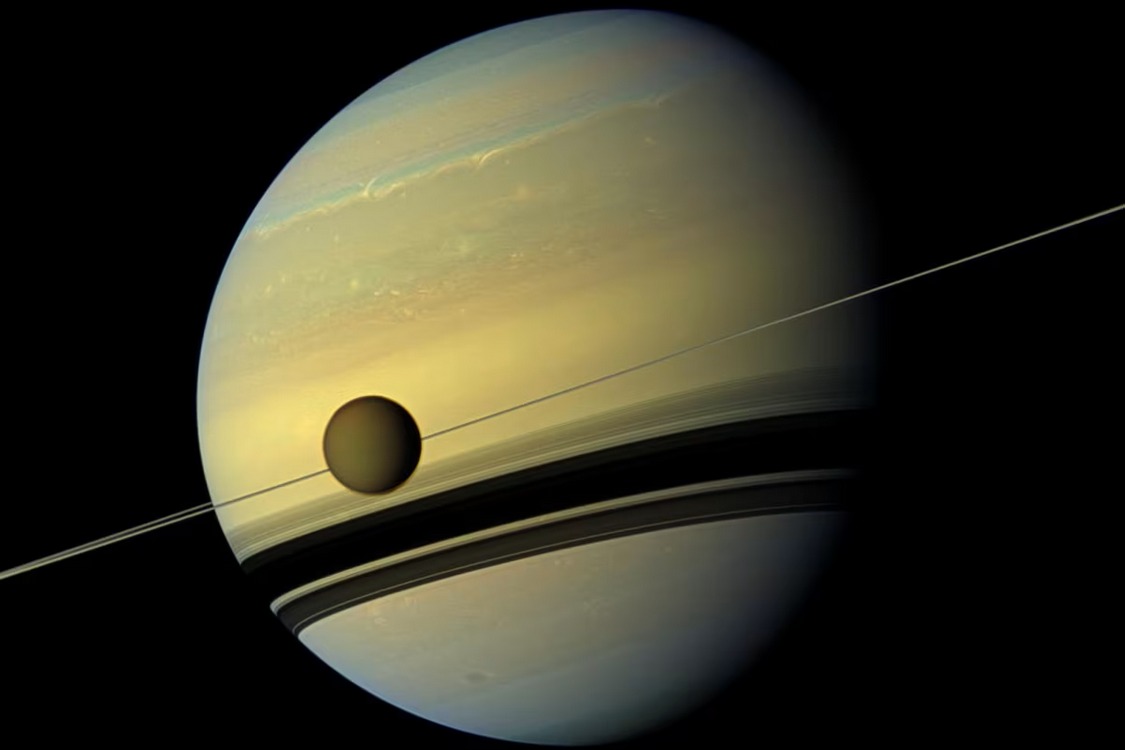
A groundbreaking study led by Matija Ćuk, a research scientist at the SETI Institute, proposes a thrilling answer to one of the solar system's most captivating enigmas: the extraordinary size of Titan, Saturn's largest moon. For decades, scientists have pondered how Titan, larger than Mercury, came to dominate its celestial environment, influencing Saturn's tilt and wobble.
The Collision That Shaped a Moon
According to Ćuk's theory, an ancient collision involving a smaller moon could have played a crucial role in Titan's formation. Utilizing data from NASA’s Cassini Probe and innovative computer simulations, he suggests that a moon approximately 1,000 times larger than Hyperion collided with Titan around half a billion years ago. This event could have not only expanded Titan but also triggered the creation of Saturn's iconic rings.
Challenging Previously Held Beliefs
For years, scientists attributed Saturn's irregular wobble to the gravitational influence of Neptune. However, Ćuk's findings challenge this notion by proposing that the dynamics of Saturn’s moons could account for the observed phenomena. His research introduces a more stringent view on how the interactions between celestial bodies lead to the intricate dance of our solar system's planets.
A Collaborative Effort in Cosmic Discovery
The implications of Ćuk's work resonate beyond just Titan. According to Professor William B. Hubbard from the University of Arizona and Carl Murray from Queen Mary University, the new theory offers a more cohesive framework than prior explanations involving the so-called Chrysalis moon. The scientific community is taking note, highlighting the potential for future discoveries that could illuminate yet more cosmic mysteries.
This research not only provides insights into Saturn and its moons but also represents a hopeful leap forward in our understanding of the complexities of planetary formation and evolution. As we continue to explore our solar system, discoveries like these remind us of the thrilling possibilities that lie beyond our planet.

