The Amazing Secret Behind Elephants' Trunks Could Transform Robotics
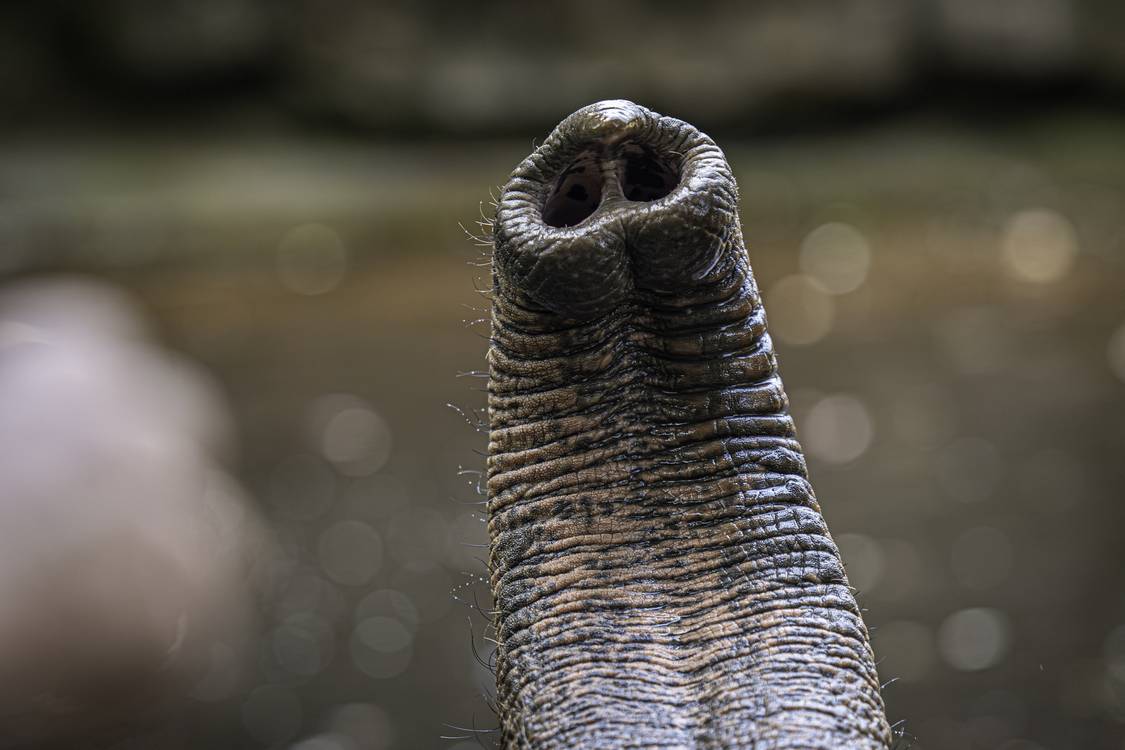
Recent research has unveiled the remarkable design of elephant trunk whiskers, revealing their intricate properties that contribute to an elephant's exceptional sense of touch. This groundbreaking study, led by Dr. Andrew Schulz and his team, highlights how these unique whiskers enable the largest land animals to perform delicate tasks, such as picking up a peanut or a tortilla chip without breaking them.
Nature's Ingenious Design
The 1,000 individual hairs covering an elephant's trunk possess a stiffness gradient that allows these creatures to detect precisely where contact occurs along each whisker. This property, which differs from that of other animals like rats and mice, provides a tactile map to the elephants. As Dr. Schulz points out, "This property helps them know how close or how far their trunk is from an object… all baked into the geometry, porosity, and stiffness of the whisker."
Applications in Robotics
The insights gained from studying these natural structures are already inspiring new developments in robotic sensing technologies. Researchers aim to replicate the functional gradient found in elephant and cat whiskers in artificial sensors. Such advancements could lead to bio-inspired sensors that provide precise information with minimal computational costs. Dr. Schulz remarks, “Bio-inspired sensors that have an artificial elephant-like stiffness gradient could give precise information purely by intelligent material design.”
A New Era of Robotic Movement
The potential applications of this research span numerous fields, possibly allowing robots to navigate and interact with their environments in safer and more sophisticated ways. The findings underscore the importance of examining natural systems to inform technological innovation, emphasizing how nature can lead us toward more intelligent designs in robotics and engineering.
This significant discovery not only enhances our understanding of elephant biomechanics but also opens up exciting new possibilities for technology inspired by nature. As researchers continue to explore these connections, we may soon see robots that can emulate the delicate touch of elephants, improving their interactions with the world around them.

